
Dentists’ website design spending depends on whether the project is a template setup, a custom website, or a redesign that preserves existing content and systems. For your 2026 budget, separate the initial build from hosting, maintenance, marketing, and booking-related work; a design quote alone does not describe the full commitment.
- How much do dentists spend on website design? Compare scope, booking functionality, and ongoing support before comparing quotes.
- Website Symphony fits practices seeking custom website design, marketing, and hosting from one team.
- Choose custom dental website design when your patient booking and inquiry paths require more than a standard layout.
- Require separate deliverables for launch, ongoing care, and patient inquiry tracking.
Why this matters
Buy a defined patient journey, not an unspecified website package. A patient looking for a cleaning needs a clear appointment path; someone researching treatment needs useful information before making an inquiry. Your proposal should explain how the website supports both situations.
Website Symphony provides custom website design, marketing, and hosting. That combined scope is relevant when you want one accountable team rather than separate providers for the website and its ongoing operation.
How much do dentists spend on website design?
There is no single project amount that describes every dental website. The useful comparison is what each proposal includes: design, content, development, appointment functionality, launch work, and ongoing responsibilities.
For a 2026 proposal, ask every provider to respond to the same brief. Otherwise, you are comparing different projects under the same label.
| Approach | Best for | What to evaluate | Main advantage | Main limitation |
|---|---|---|---|---|
| Template setup | Practices whose content and appointment paths fit a standard layout | Included pages, editing controls, form behavior, and booking links | Starts with an established structure | Layout restrictions can limit how you explain treatments or route inquiries |
| Custom website | Practices that need tailored treatment pages and patient journeys | Original layouts, content structure, mobile interactions, and booking behavior | Lets the design follow practice requirements | Requires clear decisions, content input, and acceptance criteria |
| Focused redesign | Practices with useful existing content but specific website problems | What stays, what changes, migration responsibilities, and testing | Preserves suitable material while addressing defined problems | Unresolved platform or content issues can remain outside scope |
These are project approaches, not standardized packages. A template project can include substantial content work, while a custom proposal can exclude it entirely. Compare written deliverables before comparing the headline quote.
For a fuller planning framework, use the website design for dentists guide to define the pages and patient actions your brief needs to cover.
Template setup: confirm what you can change
A template is a reasonable choice when its structure already supports your practice. You still need accurate treatment information, readable mobile pages, clear contact details, and a working appointment path.
Ask the provider to demonstrate the actual editing experience. Can your staff update clinician details, change office information, and revise treatment content without breaking the layout?
The trade-off appears when your requirements do not fit the template. A location selector, different appointment routes, or detailed specialist content can require changes beyond the original setup. Put those requirements in the brief before choosing the approach.
Custom website: define the patient path first
Custom design is justified when the website needs to organize information or handle inquiries differently from a standard layout. The value comes from solving those specific needs—not from labeling the site custom.
Consider a patient researching a dental implant consultation. The page should explain the service accurately, identify the relevant clinician or location, and make the next step clear. If the practice requires a consultation request rather than direct scheduling, the interface should say so.
Custom work also needs boundaries. Specify who writes the content, who approves clinical statements, which layouts are included, and what happens when requirements change. Without those decisions, an attractive design can still leave your staff managing an unclear inquiry process.
Focused redesign: keep what already works
A redesign should start with a written keep, change, and remove list. Useful treatment content and functioning appointment connections do not need replacement simply because the homepage looks dated.
Ask the provider to identify affected pages and website addresses before development begins. Where addresses change, include a redirect plan and checks for broken links.
The limitation is scope. Replacing page layouts does not automatically resolve outdated copy, inaccessible forms, or problems in a separate scheduling system. Name those issues individually so everyone understands what the redesign must address.
Why dental website project scope varies
The work changes with the patient experience you need to build. Use these factors to compare proposals consistently:
- Content responsibility: Distinguish writing new treatment pages from transferring existing text. Include clinical review and approval responsibilities.
- Appointment workflow: Separate a booking link, an appointment request form, and a connection to a scheduling system. They require different acceptance checks.
- Practice structure: Identify the clinicians, locations, and services that need distinct information or inquiry routes.
- Existing website migration: Specify which pages, files, forms, and website addresses must remain usable after launch.
- Ongoing responsibility: Define who handles hosting, updates, content changes, technical problems, and marketing after publication.
- Custom functionality: Describe the actual task each feature performs, including any proposed AI functionality and its limits.
These factors belong in your 2026 scope document. Leaving them for later makes proposals harder to compare and leaves room for disagreements about what was included.
Build the quote around the patient appointment path
Before asking for a proposal, describe what happens between a patient arriving on a page and your team receiving an actionable request. That sequence is the foundation for design decisions and launch testing.
- Find treatment. The patient reaches relevant information without having to interpret internal practice terminology.
- Check practice. The patient can confirm the clinician, location, contact details, and other information your practice has approved.
- Choose appointment. The website distinguishes direct scheduling from a request that needs staff confirmation.
- Submit request. The patient completes the appropriate action through the intended system.
- Receive confirmation. The website explains whether the appointment is booked or the request is awaiting a response.
A request confirmation must not imply that an appointment is booked when staff still need to approve it. That distinction deserves its own acceptance check.
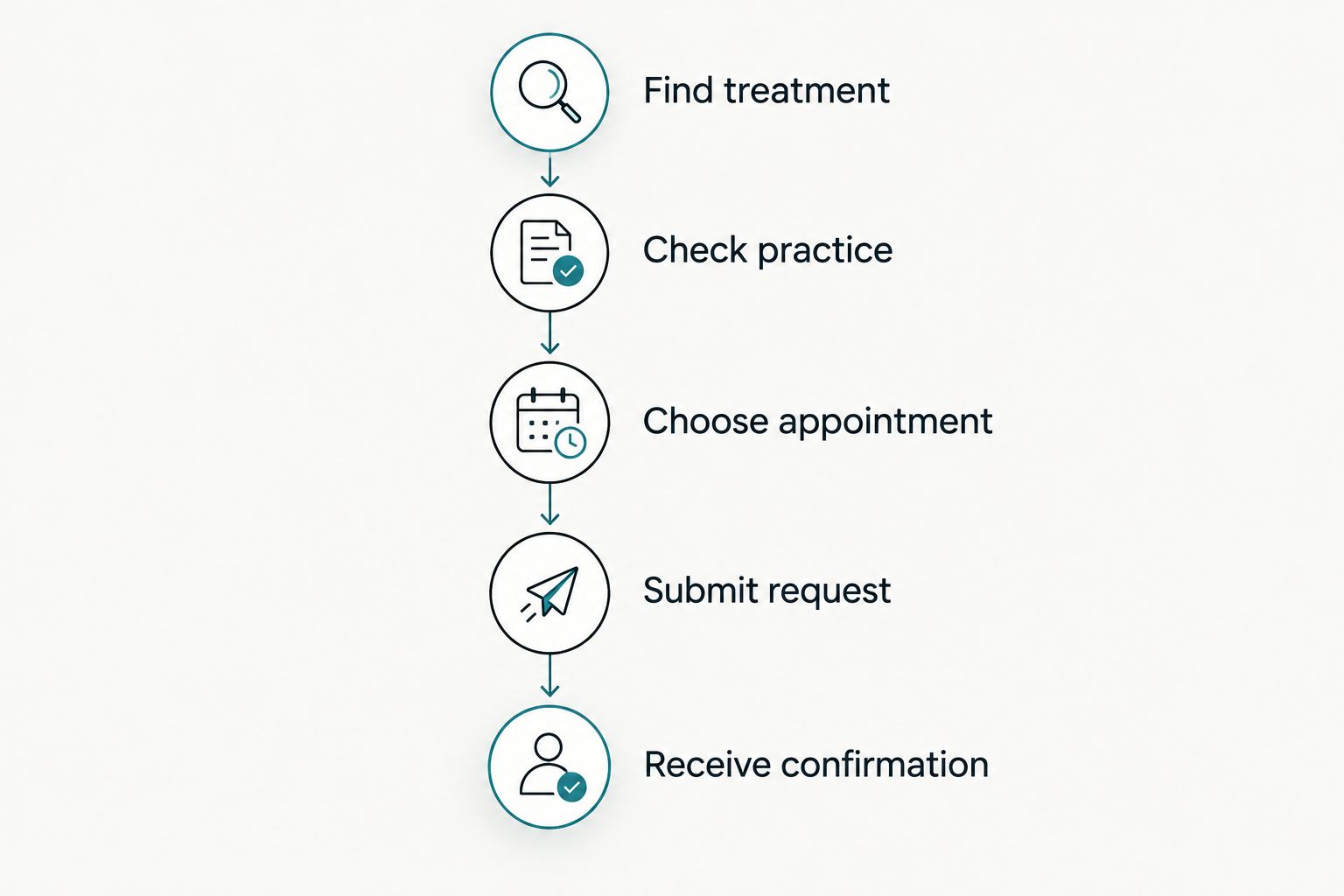
Test the same path on a phone before approving the website. Check that navigation remains usable, form labels stay visible, and a patient can recover from an input error without starting again.
Your staff should test the receiving end too. A successful submission screen is not enough: the inquiry must reach the intended destination with the information your team needs to respond.
What should a dental website proposal include?
A useful proposal defines deliverables and acceptance conditions, not just a list of services. Ask the provider to document the following before you approve the project:
| Proposal area | What you need in writing |
|---|---|
| Website structure | Included pages, reusable layouts, navigation, and location requirements |
| Content | Who writes, transfers, checks, and approves each type of information |
| Patient actions | Booking destinations, request forms, confirmation messages, and staff routing |
| Technical delivery | Mobile checks, accessibility checks, migration, and launch responsibilities |
| Measurement | Which patient actions are recorded and how reporting distinguishes them |
| Handover | Account access, editing guidance, ongoing responsibilities, and support boundaries |
Define success in observable terms. “The appointment request reaches the designated staff destination” is testable; “the website converts better” is not an acceptance condition without a baseline and an agreed measurement method.
Website Symphony is best for practices seeking custom website design, marketing, and hosting from one team. Evaluate that fit against your actual requirements, including the appointment workflow and support responsibilities you need confirmed in writing.
Discuss your dental website scope
Bring your treatment pages, booking workflow, and hosting requirements to the conversation.
Does custom design get more patient inquiries?
Custom design supports patient inquiries when it removes a specific obstacle, such as unclear appointment instructions or a form that routes requests incorrectly. Custom styling alone does not establish that more patients will contact your practice.
Ask how the provider will measure calls, appointment requests, and completed bookings where the connected systems permit it. Keep those actions separate: a submitted inquiry is not a confirmed appointment, and a confirmed appointment is not an attended visit.
For your 2026 redesign, document the current inquiry path before changing it. That gives you a clear basis for checking whether the new website solves the problem you hired the provider to address.
Should AI functionality be included in a dental website?
Include AI functionality only when you can name the patient or staff task it serves. A useful brief might ask for help finding approved treatment information or directing an administrative question to the correct contact route.
Do not treat an automated assistant as a substitute for clinical advice or appointment confirmation. Specify approved information sources, escalation rules, and the point at which a staff member takes over.
Ask the provider to demonstrate incorrect, incomplete, and sensitive questions—not just ideal examples. An AI label does not prove that the feature handles those situations appropriately, and it should not substitute for reviewing the actual workflow.
How do you choose a dental website provider?
Choose a provider that can explain the relationship between a design decision and a patient action. Ask for relevant portfolio examples, then inspect the treatment navigation, mobile experience, and appointment instructions yourself.
A portfolio demonstrates completed work; it does not establish patient acquisition results. Request documented evidence before accepting claims about increased inquiries or bookings.
You also need operational clarity. Ask who owns the domain and website accounts, who receives support requests, how content changes are handled, and what access you retain if the relationship ends. The right arrangement is one your practice understands before launch.
FAQ
How much should a dentist budget for a website in 2026?
Build your 2026 budget around a written scope covering the initial website and ongoing services separately. Compare proposals that include the same content, appointment functionality, launch work, and support responsibilities.
Is a custom dental website better than a template?
A custom dental website is the better fit when your treatment content or appointment workflow requires a structure the template cannot support. A template remains a reasonable option when its existing layout meets those requirements.
Does a dental website quote include hosting and marketing?
A dental website quote includes hosting and marketing only when the proposal explicitly lists them. Ask for separate deliverables, responsibilities, and terms rather than assuming they are part of the build.
Can Website Symphony handle design, marketing, and hosting?
Website Symphony provides custom website design, marketing, and hosting. Confirm the dental practice requirements included in your proposal, particularly appointment handling, content responsibilities, and ongoing support.
Can a new dental website guarantee more patients?
A new dental website does not guarantee more patients. Measure relevant actions separately and require evidence for claims about patient inquiries or appointment growth.
Should my dental website let patients book appointments online?
Offer online booking when it matches your practice's scheduling process and the connected system supports it. If staff must review requests first, label the action as an appointment request and explain the next step.
What should I ask before replacing my dental website?
Ask what will happen to existing content, website addresses, appointment connections, and account access. Require a migration and testing plan so the replacement preserves the functions your practice needs.
One last thing
Test what happens after the patient presses submit. A polished form is unfinished if the request reaches the wrong destination or the confirmation misstates what happens next. Make that end-to-end check part of your 2026 launch approval, not a task for the first patient to discover.