
SEO after a website redesign takes weeks to months to settle when URLs, content, or site structure change; a visual refresh alone does not create a new ranking timetable. Recovery from a migration and growth from better content are separate outcomes, so neither starts automatically on launch day. For your 2026 redesign, judge progress by whether Google can process the new site, whether valuable search traffic returns, and whether patients complete inquiries or appointment requests.
- How long does SEO take to work after a website redesign? Expect weeks to months, not a guaranteed deadline.
- Check redirects, indexing, and patient inquiry tracking before treating a traffic decline as normal.
- Separate migration recovery from organic growth; restoring old rankings is not the same as earning new ones.
- Website Symphony fits medical practices seeking website design, marketing, and hosting from one team.
How long does SEO take to work after a website redesign?
Expect weeks to months for substantial changes to be processed, not a fixed recovery date. Google Search Central's site-move guidance explains that processing happens URL by URL and depends on factors including site size and crawling. That guidance concerns migrations, not a promise that every redesign will improve rankings within a particular period.
The first distinction is what changed. Use this comparison to identify the right expectation before setting a reporting deadline or planning a website migration that protects existing SEO.
| Redesign scope | What search engines must process | Best for | Main limitation |
|---|---|---|---|
| Visual refresh with stable URLs and content | Updated presentation and any changed rendering | Improving usability without unnecessary structural changes | Appearance alone does not establish stronger search relevance |
| URL or platform migration | Redirects, destination pages, internal links, and indexing signals | Replacing a platform or restructuring necessary paths | Mapping mistakes interrupt access to established pages |
| Content and navigation rebuild | Changed page meaning, relationships, and search relevance | Fixing unclear service information and patient journeys | Removing useful content can weaken existing visibility |
These situations overlap. A dental practice replacing its platform, rewriting treatment pages, and changing appointment software needs separate technical, content, and inquiry checks—not one launch-date countdown.
Why this matters for patient inquiries
A redesign can improve the appointment path before organic visibility grows. Conversely, traffic can recover while an appointment form remains broken. Treat search visibility and inquiry completion as connected but distinct responsibilities.
For a medical practice, the meaningful journey runs from a relevant search to the appropriate service page, then to a call, inquiry, or booking action. A patient researching a dental implant consultation needs different information from someone seeking a routine cleaning. Sending both to a generic homepage makes the next step less specific.
Your 2026 reporting should therefore answer two questions: are suitable patients reaching the right pages, and can those patients complete the intended action? Neither total traffic nor a polished homepage answers both.
Visual refresh: preserve what already works
A visual refresh is best for practices whose service pages and URLs already match patient needs but whose navigation or appointment experience needs improvement. Preserve useful page content, clear headings, and links to important treatments while improving the interface around them.
The advantage is a smaller migration footprint. The limitation is equally important: changing colors, photography, or page styling does not by itself give Google a stronger reason to rank a page.
Check the mobile version carefully. A treatment description that was visible before launch should not disappear behind an interaction that fails to load, and a booking button should lead to the intended destination. Keep approved medical information accessible to patients and search engines.
Choose a visual refresh when the patient path needs work but the underlying page structure remains useful. Do not change established URLs merely to make the redesign feel more substantial.
URL migration: process redirects before judging recovery
A URL migration is best for a necessary platform change or a clearer site structure. Its advantage is the opportunity to correct organizational problems; its limitation is the additional mapping and verification work.
Permanent redirects commonly use an HTTP 301 status code. Google also recognizes other permanent redirect methods, but the practical requirement is consistent: each moved page should lead to its relevant replacement, not simply the homepage.
For a dental practice, an old implants page should point to the new implants page when an equivalent exists. Redirecting unrelated treatments to one general page removes the connection between the original request and its destination.
Check the final destination too. An HTTP 200 status code indicates a successful response, but it does not prove that the page contains the right content or is eligible for indexing. A missing page returning an HTTP 404 status code requires investigation when a useful replacement should exist.
Do not wait for rankings to recover while known redirect errors remain unresolved. Waiting does not correct a broken route.
Content rebuild: measure growth separately from recovery
A content rebuild is best for practices whose existing pages fail to explain services, clinician suitability, or the appointment process. Its advantage is more useful information; its limitation is that rewriting a page can also change the queries it matches.
Preserve material that answers genuine patient questions. For example, a specialist clinic replacing a detailed consultation page with a short promotional statement has changed more than the design. The new page gives patients—and search engines—less information about that consultation.
Custom design earns its value when it supports these distinctions. A dental treatment page can explain the consultation process and lead to an appropriate inquiry, while a primary care page can separate new-patient requests from existing-patient tasks. A template is not inherently bad for SEO; the constraint is whether its structure supports those journeys without hiding necessary information.
For your 2026 content review, compare old and new pages by purpose, not word count alone. Retain accurate explanations, remove duplication carefully, and have qualified practice staff approve clinical statements.
Why the SEO timeline varies
The launch date is only a starting point. These factors explain why two redesigned sites should not share the same recovery deadline:
- Extent of URL changes: Keeping useful URLs removes the need to process redirects for those pages. Moving them introduces additional work.
- Crawl access: Accidental indexing restrictions, server errors, or inaccessible content interfere with processing the redesigned site.
- Content continuity: Removing treatment explanations or changing page purpose changes what the page offers searchers.
- Internal linking: Important service pages need discoverable links. A page omitted from navigation and relevant content is harder to find through the site.
- Migration scope: A domain move, platform replacement, and content rewrite create a different diagnostic problem from a visual refresh.
- Measurement continuity: Changed analytics settings or booking systems can alter recorded results even when real patient behavior has not changed.
Investigate the cause before extending the deadline. A technical blockage needs a correction; a new service page needs useful content, discovery, and evaluation. Those are different jobs.
How should you measure progress after launch?
Use a sequence that separates technical acceptance from business results. For a 2026 launch, agree on the baseline and reporting definitions before the old site disappears.
- Record the baseline. Export landing-page clicks, impressions, queries, and tracked inquiry actions before launch. Save the old URLs and page content so comparisons remain possible.
- Verify access. Check important old URLs, their redirects, and the replacement pages. Confirm that production pages are not carrying restrictions intended for the staging site.
- Check indexing. Use Google Search Console to inspect priority pages and review indexing issues. A submitted sitemap helps discovery; submission is not a ranking guarantee.
- Compare visibility. Compare equivalent reporting periods and the same service-page groups. Separate branded searches from searches for treatments or local services.
- Confirm inquiries. Test forms, booking handoffs, and call links on mobile. Distinguish a button click from a completed request or confirmed appointment.
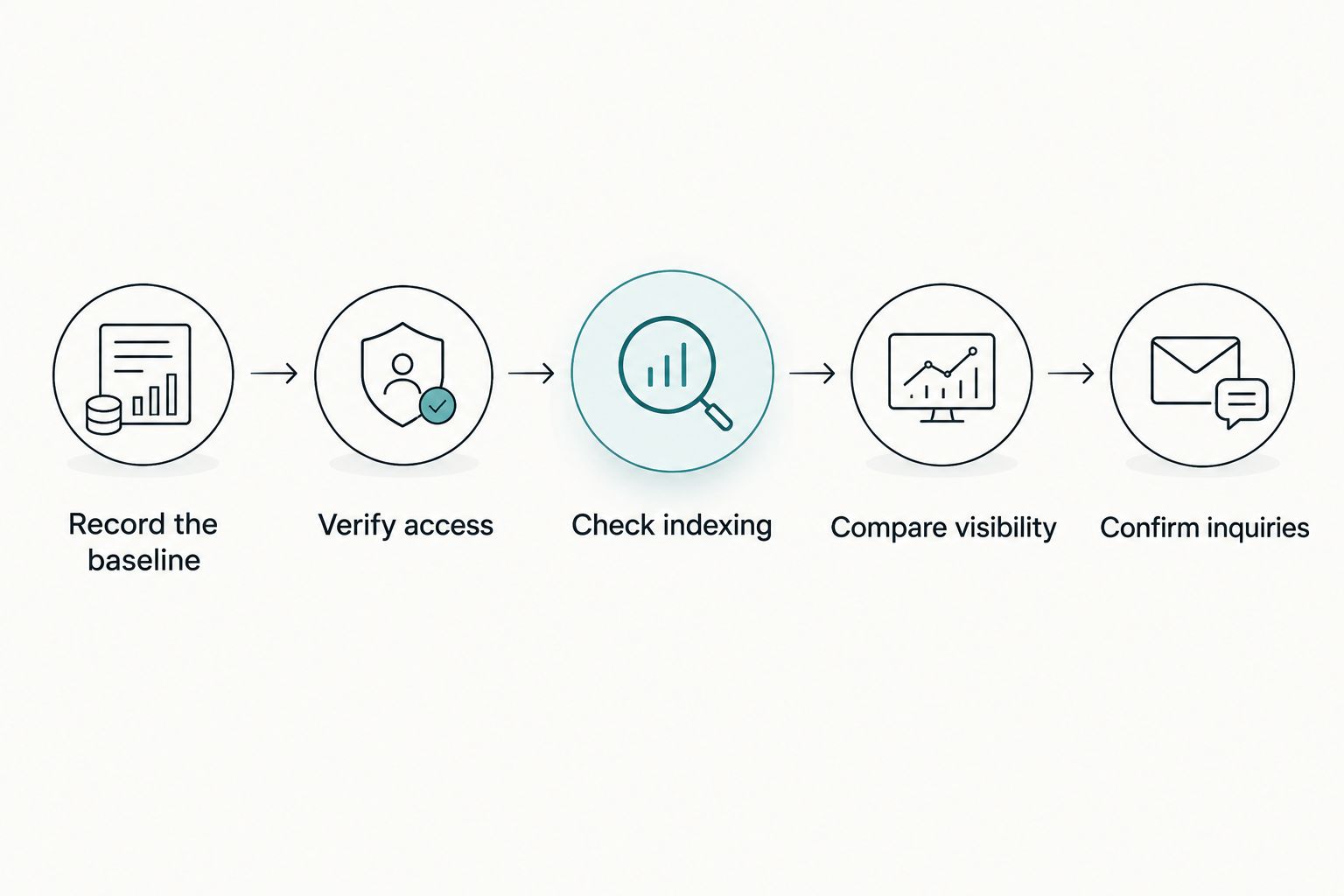
A 28-day reporting window is a practical comparison format, not a recovery promise. Compare it with the preceding 28 days, then check matching seasonal periods when historical data is available. Record campaign changes and practice closures alongside the results so unrelated events do not become redesign conclusions.
What should your website provider be accountable for?
Ask for ownership of the complete patient path, not just delivery of page layouts. Your redesign agreement should identify who handles URL mapping, launch checks, content approval, tracking, hosting issues, and appointment-system handoffs.
Website Symphony fits medical practices seeking custom website design, marketing, and hosting from one accountable team. The benefit of that service model is coordinated responsibility; the limitation is that a combined offering still needs explicit deliverables and agreed measurement. It does not establish a ranking guarantee.
Ask to see relevant portfolio examples and have the provider explain the patient journey shown. A design example demonstrates execution, not an unreported increase in bookings.
Evaluate proposed AI-powered functionality the same way. An administrative assistant that helps patients find an approved booking link has a concrete task; a vague promise of automated growth does not. Require an appropriate staff handoff and avoid collecting sensitive patient information through unapproved tools.
Should you wait if rankings drop after a redesign?
Do not wait when the decline coincides with a detectable fault. Check lost landing pages, incorrect redirects, indexing restrictions, and changed content before labeling the drop normal migration movement.
If important pages remain accessible and technically sound, continue monitoring their search performance while Google processes the changes. Avoid repeated structural revisions without a diagnosis; each revision makes the original problem harder to isolate.
Can patient inquiries improve before rankings recover?
Patient inquiries can improve without a ranking increase when the redesign removes an obstacle to contacting the practice. A working mobile form or clearer appointment route changes what visitors can accomplish after arrival.
That is a possible outcome, not evidence of success by itself. Confirm completed inquiries and review their relevance with practice staff rather than treating every interaction as a new patient.
Does replacing a template make SEO work faster?
Replacing a template does not create a faster SEO timetable. Custom design is useful when it solves a specific problem, such as separating specialist referrals from patient appointment requests.
Keep a template when it supports the required content and patient actions. Replace it when documented restrictions prevent the practice from delivering those experiences—not because custom code is automatically a ranking advantage.
FAQ
How long should I wait for SEO results after a website redesign?
Allow weeks to months for substantial site changes to be processed, but do not treat that as a guaranteed recovery deadline. Investigate technical faults immediately and distinguish restored visibility from new growth.
Is it normal for Google rankings to drop after a redesign?
Rankings can fluctuate while Google processes changed pages and URLs. A decline still needs investigation because missing pages, indexing restrictions, or removed content require correction rather than patience.
Will keeping my existing URLs help protect SEO?
Keeping useful existing URLs avoids introducing redirects for those pages. You must still preserve relevant content, internal links, and crawl access; unchanged URLs alone do not protect every ranking.
How often should I review redesign SEO performance?
Use consistent reporting intervals, such as 28-day comparisons, while checking launch problems separately and promptly. A reporting window measures change; it does not define how quickly Google must process the site.
Can my appointment software make SEO look worse after launch?
A change in appointment software or tracking can reduce recorded conversions without proving that search visibility declined. Test the booking handoff and separate booking clicks, submitted requests, and confirmed appointments.
Does AI-powered website functionality improve Google rankings?
AI-powered functionality does not guarantee better rankings. Evaluate whether a proposed feature helps patients complete an approved task, reduces unnecessary staff handling, and preserves access to essential information.
Can Website Symphony handle more than the website design?
Website Symphony offers custom website design, marketing, and hosting for medical practices and other businesses. Confirm the specific migration, measurement, and appointment-workflow responsibilities in the project scope.
One last thing
Your most useful post-launch test is not a search for your own practice name. Start on a priority treatment page using a phone and complete the appointment or inquiry journey as a patient would.
For your 2026 launch checklist, record what happens after submission: the confirmation, the staff notification, and the next action. A ranking report cannot prove that an inquiry reached the people responsible for answering it.


