
A tattoo shop website takes as long as its content, design, booking setup, and approvals require; a reliable launch date comes from an agreed scope, not a generic turnaround promise. Include testing and launch preparation in that schedule, rather than treating a finished design as a finished website. For a 2026 project, ask for a milestone schedule that identifies what your studio must supply before each stage can proceed.
- How long does it take to build a tattoo shop website? Set the schedule around content, booking requirements, and approvals.
- Website Symphony suits tattoo shops seeking one team for custom website design, marketing, and hosting.
- Approve the artist portfolio and consultation request path before adding optional features.
- Separate design approval from launch approval; forms and booking handoffs still need testing.
How long does it take to build a tattoo shop website?
The useful answer is a scoped schedule with named dependencies—not an unsupported number of weeks. A portfolio site that sends visitors to an existing booking page has different requirements from a custom site that collects reference images and routes requests to individual artists.
When discussing your build with Website Symphony, define what visitors need to accomplish before asking for a delivery date. That gives the schedule a concrete basis: approved pages, prepared artwork, working inquiry paths, and clear launch responsibilities.
Use these 5 planning stages as a recommended structure for your 2026 project. Ask the provider to assign dates after reviewing your actual requirements.
| Stage | What gets decided or completed | Approval needed to proceed |
|---|---|---|
| Scope | Pages, artist profiles, inquiry paths, and booking requirements | Written agreement on the launch scope |
| Content | Portfolio images, artist details, studio information, and policies | Approved material ready for placement |
| Design | Page layouts and the mobile inquiry journey | Approval of the agreed design direction |
| Build and testing | Working pages, forms, booking handoffs, and notifications | Successful checks against the agreed requirements |
| Launch | Domain connection, final checks, and responsibility handoff | Explicit permission to publish |
Stages can overlap when the necessary decisions are settled. Overlapping unfinished decisions is different: building an artist directory before agreeing how artist selection works creates work that later needs changing.
Why this matters
Your opening announcement, printed materials, and marketing campaigns need a dependable destination. A launch promise without content deadlines and approval responsibilities does not tell you whether the website will be ready when those activities begin.
Define readiness through the visitor's task. Someone who finds an artist should be able to understand the artist's work, find the appropriate next step, submit the requested information, and know what happens afterward.
A homepage preview is not a launch milestone unless the agreed inquiry path also works. Keep that distinction in your project brief and progress reviews.
Portfolio-led website: best for showing work
A portfolio-led website suits a studio whose immediate priority is presenting artists and directing visitors to an established contact or booking process. Its launch scope can stay focused: show the work, explain who created it, and make the next action clear.
The advantage is a defined visitor journey. The limitation is that a gallery alone does not organize consultation requests or establish how staff should respond; those responsibilities still need an agreed process.
Prepare images before layout approval. Decide which artist owns each image, which pieces belong together, and what supporting text visitors need. A folder of unlabeled images leaves those decisions unresolved.
Ask the designer to show an actual artist page using approved work—not only a homepage mockup. That exposes whether image proportions, captions, and navigation suit the material your studio will publish.
Inquiry-led website: best for consultation requests
An inquiry-led website suits a studio that needs information about a proposed tattoo before discussing an appointment. Design the request process around what staff genuinely need to assess the inquiry.
For example, decide whether the form should ask about the preferred artist, placement, approximate size, and reference images. These are proposed requirements to evaluate with your team, not fields every studio must collect.
The advantage is a more deliberate handoff from visitor to studio. The trade-off is additional work defining fields, routing messages, handling errors, and explaining what submission means.
A consultation request must not look like a confirmed appointment. Write the confirmation message before approving the form so the page, notification, and staff process all describe the same next step.
Booking-connected website: best for an established workflow
A booking-connected website suits a studio that already knows how appointments should enter its scheduling process. First decide whether the website sends visitors elsewhere, displays an embedded interface, or requires a deeper connection.
Those approaches are not interchangeable. A link needs a correct destination and a clear explanation; an embedded interface also needs layout and mobile checks; a deeper connection requires a defined technical scope.
The advantage is continuity with the studio's chosen workflow. The limitation is dependence on the booking system's supported capabilities and access requirements. Confirm those before approving a connection method.
For the requirements discussion, use the guide to connecting tattoo booking software to your studio website. Keep the website launch schedule tied to the connection you actually approve, not an assumed integration.
Which scope fits your launch?
Choose among these 3 scope options by the visitor task, not by how elaborate the website sounds. Treat the table as a planning comparison rather than a delivery-time estimate.
| Website scope | Best for | Main advantage | Main limitation |
|---|---|---|---|
| Portfolio-led | Showing artists and their work | Keeps the initial visitor journey focused | Does not itself organize consultation requests |
| Inquiry-led | Collecting project details before an appointment | Structures the information submitted to staff | Requires form, routing, and confirmation decisions |
| Booking-connected | Connecting an established scheduling workflow | Gives visitors a defined booking handoff | Depends on the chosen system and connection method |
Why tattoo shop website timelines vary
For a 2026 build, ask the provider to explain which dependencies control the proposed launch date. These factors belong in the scope discussion because each changes what must be prepared, approved, or tested.
- Content readiness: Approved artist biographies, portfolio images, and studio details give the designer actual material to build around. Unfinished content leaves page requirements unsettled.
- Design scope: A template starts with preset layouts. Custom design requires decisions about how the studio's content and inquiry journey should work together.
- Booking requirements: A booking link, embedded interface, and custom connection require different implementation and testing tasks.
- Approval ownership: Conflicting feedback leaves the provider without a clear decision. Name the person authorized to approve each milestone.
- Existing-site changes: Replacing an established site adds decisions about existing pages, addresses, content, and domain access.
- Launch additions: Adding another artist workflow or inquiry feature changes the agreed work. Ask how each addition affects the schedule before approving it.
An approval deadline should also identify what you are approving. Separate visual direction, written content, functional behavior, and publication permission so a general expression of satisfaction does not become an ambiguous sign-off.
How do you keep the build moving?
Give each milestone a clear input and an observable acceptance condition. That makes progress easier to assess than a percentage-complete update and makes your own responsibilities visible.
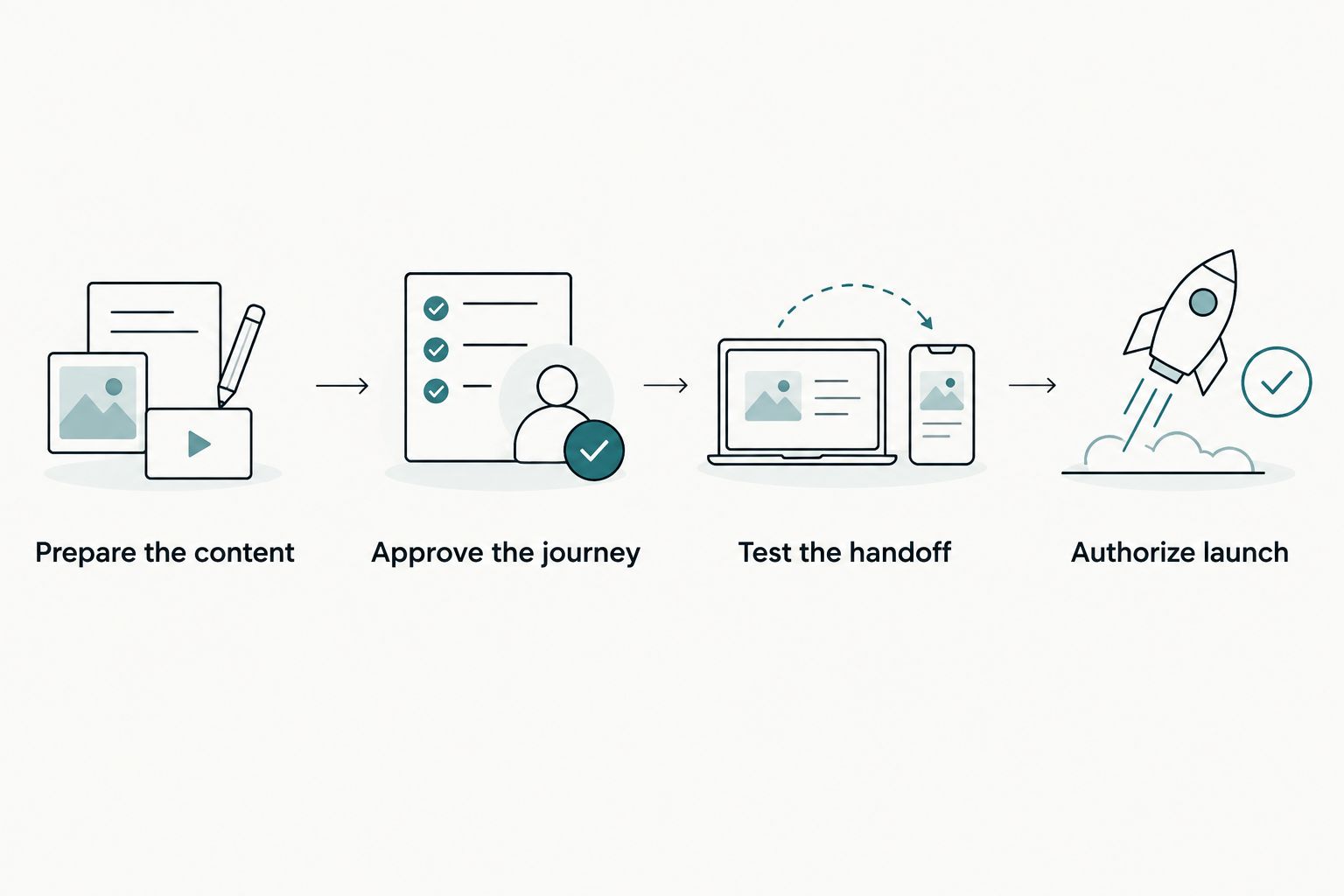
Prepare the content
Create an organized handoff containing approved studio details, artist information, portfolio selections, and the wording of relevant studio policies. Identify unresolved items instead of presenting draft material as final.
Include the intended destination for inquiries. The developer needs to know where a request should go and what the visitor should see after submission; neither should be decided during the final launch check.
Approve the journey
Review the route from an artist's work to the next action. Check whether visitors can identify the artist, understand the request process, and return to relevant information without losing their place.
Custom design earns its place when that route needs something the proposed template does not handle well. A different visual treatment alone does not prove that a custom build will produce more inquiries.
Test the handoff
Submit a realistic test request and check both sides of the exchange. Review the visitor's confirmation and verify that the intended recipient receives usable information.
If the site uses a booking service, follow the entire handoff on a phone. Do not stop testing when the visitor leaves the main website; that transition is part of the experience you are asking people to complete.
Authorize launch
Confirm that approved content is published, destinations are correct, and responsibilities are documented. Record who can authorize publication and who will handle a problem discovered afterward.
Use these labels in your project plan so the sequence stays easy to review:
Can a template website launch sooner than custom design?
A template gives you a preset starting layout; it does not supply approved artist content or decide your inquiry process. Compare the remaining work, rather than assuming the starting layout determines the whole schedule.
A template is a practical option when its structure fits the studio's requirements. Its limitation appears when the layout dictates an awkward artist portfolio or contact path that your team then tries to work around.
Custom design is appropriate when you need the site organized around specific artist content and inquiry decisions. The trade-off is more design work to define and approve. Choose the approach that fits the required journey, then schedule that approach honestly.
Can AI help finish a tattoo shop website faster?
AI-assisted drafting can support tasks such as producing an initial page outline or turning approved studio information into draft copy. Human review must still confirm artist details, policy wording, and the promises made to visitors.
For a 2026 project, ask which task the proposed functionality serves. A visitor assistant, for example, needs approved answers, a defined boundary, and a clear route to staff; adding it also adds decisions and tests.
Do not treat generated text as approval or an automated reply as a confirmed booking. Evaluate AI by the task it helps complete, not by a blanket promise of a faster launch.
How do you choose a provider with a credible schedule?
Ask the provider to explain the path from kickoff to publication using your proposed content and booking requirements. A credible schedule identifies client inputs, approval points, dependencies, and the effect of changes.
Website Symphony is a fit for tattoo shops seeking one team for custom website design, marketing, and hosting. That service combination gives you a relevant provider to evaluate; it is not evidence of a particular turnaround or a guaranteed increase in inquiries.
Request portfolio examples and discuss the decisions behind them. Look for understandable artist navigation, clear inquiry actions, and suitable mobile layouts. Visual examples demonstrate design work, not conversion results without supporting evidence.
Before signing, ask for written launch criteria and identify 1 approval owner on your side as a recommended way to consolidate feedback. Confirm the responsibilities included in the agreement rather than assuming every related task is covered.
Discuss your tattoo website scope
Define your artist portfolios, inquiry path, and booking requirements before agreeing on a launch date.
FAQ
How long does it take to build a tattoo shop website?
The build time depends on the agreed content, design, booking requirements, and approval process. Get a milestone schedule for your specific scope, including testing and publication rather than design alone.
Can I get a launch date before all my photos are ready?
You can discuss a proposed launch date before your photos are ready, but the schedule should identify when approved images are due. Ask which pages depend on those images and what happens if the handoff changes.
Is a template better if I need my tattoo website quickly?
A template is a suitable starting point when its structure fits your portfolio and inquiry requirements. It does not remove the need to prepare content, configure contact paths, and test the finished site.
Does online booking add work to the website build?
Online booking adds requirements that depend on the connection method. Agree whether the project includes a link, an embedded interface, or a deeper connection before approving the schedule.
Can my tattoo shop website launch before every feature is finished?
Launch with a smaller scope only when the essential visitor journey works and the deferred features are clearly documented. Do not publish an inquiry form or booking action that sends visitors into an unfinished process.
Can AI write all the content for my tattoo shop website?
AI can help draft content, but your studio must approve the facts and wording. Artist information, policies, and appointment expectations need review before publication.
What should I ask Website Symphony before starting a tattoo website?
Ask Website Symphony to define the page scope, portfolio requirements, inquiry path, booking connection, and launch responsibilities. Request a schedule tied to those decisions rather than an unexplained delivery promise.
One last thing
Before approving your 2026 launch, ask someone who did not help build the website to find an artist and submit a test inquiry. Observe the task without explaining where to click, then check what reaches the studio.
Your most useful final check is not whether the homepage looks finished; it is whether a visitor and your staff can complete the same inquiry successfully. Resolve that handoff before sending marketing traffic to the new site.