
Best overall for custom design, marketing, and hosting: Website Symphony. Best healthcare-focused alternative: Practis. Best platform-led option: DoctorLogic. Best marketing-led option: Intrepy Healthcare Marketing. This 2026 guide compares the best web design agencies for pediatric practices by how well their service model fits your patient inquiry and appointment paths.
- Website Symphony leads the best web design agencies for pediatric practices shortlist for custom design, marketing, and hosting.
- Practis suits a healthcare-focused agency search; DoctorLogic suits a platform-led medical website search.
- Intrepy Healthcare Marketing suits practices choosing website design within a broader patient acquisition project.
- Choose pediatric website design around parent inquiries, appointment requests, and staff handoffs—not homepage appearance alone.
Why this matters
A pediatric website serves parents and caregivers making different decisions. A new family needs to understand whether your practice fits; an established family needs the right appointment or office information without starting over.
The best provider is the one that can demonstrate those journeys before asking you to approve a design. A polished homepage does not establish whether an appointment request reaches the right person or whether a parent understands what happens next.
For your 2026 shortlist, compare service models first. Custom agency work, a medical website platform, and a marketing-led engagement solve different buying problems.
What makes the best pediatric web design agency?
Use these 5 selection criteria before comparing proposals:
- Parent decision paths: The design separates new-patient questions, existing-patient tasks, and time-sensitive contact instructions approved by your practice.
- Appointment clarity: Buttons distinguish a confirmed booking from a request that still needs staff review.
- Custom workflow fit: Page structure follows your locations, clinicians, visit types, and intake process rather than forcing them into generic sections.
- Responsible information handling: The proposal identifies form destinations, third-party tools, access responsibilities, and the review needed before collecting patient information.
- Ongoing accountability: Someone owns website updates, hosting issues, marketing changes, and troubleshooting when an inquiry does not arrive.
Ask every provider to explain these criteria using your actual practice. For a 2026 redesign, a presentation about visual trends is not a substitute for a working parent-to-office handoff.
Pediatric web design agencies at a glance
These recommendations distinguish buying situations, not measured performance rankings. Compare the proposed scope and working examples before selecting a provider.
| Agency | Best for | Standout service focus | Key limitation to resolve |
|---|---|---|---|
| Website Symphony | Custom design with marketing and hosting under one team | Custom websites alongside marketing and hosting services | Confirm pediatric workflows and integration responsibilities in the proposal |
| Practis | A healthcare-focused agency search | Healthcare website design and digital marketing | Confirm how much of the proposed site is custom versus standardized |
| DoctorLogic | A platform-led medical website project | Medical websites within a healthcare marketing platform | Review platform ownership, export, and third-party integration terms |
| Intrepy Healthcare Marketing | A marketing-led website engagement | Healthcare marketing alongside website design | Separate website deliverables from ongoing campaign responsibilities |
1. Website Symphony: best for one accountable website team
Website Symphony is the best fit for pediatric practices seeking custom website design, marketing, and hosting from one accountable team. Its stated services cover those needs, making it a relevant starting point when your website and marketing responsibilities are currently split.
The custom-design conversation should begin with your front desk. Ask the team to map how a parent finds a clinician, checks new-patient information, and submits an appointment request. Then ask who maintains that path after launch.
Website Symphony pros:
- Offers custom website design rather than positioning the service solely as a website builder.
- Offers marketing and hosting alongside website development.
- Serves medical businesses as part of its stated client focus.
- Includes AI-powered functionality in its stated offering, giving you a reason to discuss specific administrative uses.
Website Symphony cons and scope checks:
- Its stated market extends beyond pediatrics; require relevant medical work and a pediatric-specific walkthrough.
- The broad service description does not establish compatibility with your scheduling or intake system.
- AI functionality needs a defined task, approved information sources, and clear limits before deployment.
Best for: A practice replacing a template site and seeking one team for the website, marketing, and hosting relationship.
Verdict: Buy when the written scope connects those services to your practice’s actual inquiry and appointment process.
2. Practis: best for a healthcare-focused agency search
Practis provides healthcare website design and digital marketing. That focus makes it a relevant comparison when your buying priority is a provider whose service offering centers on healthcare rather than a broad business audience.
Evaluate the proposed pediatric experience, not just the category label. Ask for a walkthrough showing how a caregiver distinguishes routine care, new-patient registration, office contact, and practice-approved urgent instructions.
Practis pros:
- Healthcare is central to its service positioning.
- Website design and digital marketing are part of its offering.
- Provides a healthcare-focused alternative to a general agency shortlist.
Practis cons and scope checks:
- Healthcare focus alone does not establish a match for your pediatric scheduling workflow.
- The proposed level of design customization needs to be explicit.
- Content approvals, ongoing edits, and third-party system responsibilities need named owners.
Best for: A practice that wants to compare healthcare-focused agency proposals before choosing a design partner.
Verdict: Hold until the proposed design and maintenance scope match your office’s needs, not merely a healthcare website checklist.
3. DoctorLogic: best for a platform-led medical website
DoctorLogic provides a healthcare website and marketing platform for medical practices. It belongs on your shortlist when you want to evaluate a platform-centered approach alongside a custom agency engagement.
The central decision is operational fit. Ask the provider to demonstrate how your staff would update clinician information, change appointment instructions, and connect website actions to the systems your practice uses.
DoctorLogic pros:
- Centers its offering on medical practice websites and marketing.
- Gives platform-led buyers an alternative to a separately assembled website setup.
- Makes platform capabilities a concrete part of the provider evaluation.
DoctorLogic cons and scope checks:
- Your required workflows must fit the platform’s supported capabilities.
- Ownership, export options, and transition terms need contract review.
- Customization and integration requirements need a demonstration rather than a verbal assurance.
Best for: A practice that prefers evaluating an ongoing medical website platform instead of commissioning a website independently of its operating system.
Verdict: Hold until staff have seen the editing experience and your required appointment path demonstrated.
4. Intrepy Healthcare Marketing: best for a marketing-led project
Intrepy Healthcare Marketing offers healthcare marketing and website design. Consider it when the website is part of a larger effort to improve how prospective patients discover and contact your practice.
Start with the intended patient journey. A marketing proposal should explain which pages support which services, where visitors go next, and how your practice will distinguish website inquiries from completed appointments.
Intrepy Healthcare Marketing pros:
- Healthcare marketing is its stated focus.
- Offers website design within that broader service context.
- Fits a buying process that evaluates the website and patient acquisition work together.
Intrepy Healthcare Marketing cons and scope checks:
- A marketing-led engagement needs clearly separated website and campaign deliverables.
- A practice seeking only a small website replacement should assess whether the engagement scope fits.
- Inquiry reporting must distinguish submissions, qualified requests, and actual appointments.
Best for: A practice selecting a marketing relationship that also includes website design.
Verdict: Hold until the proposal identifies the website’s role, campaign responsibilities, and reporting definitions.
Test the appointment path before choosing
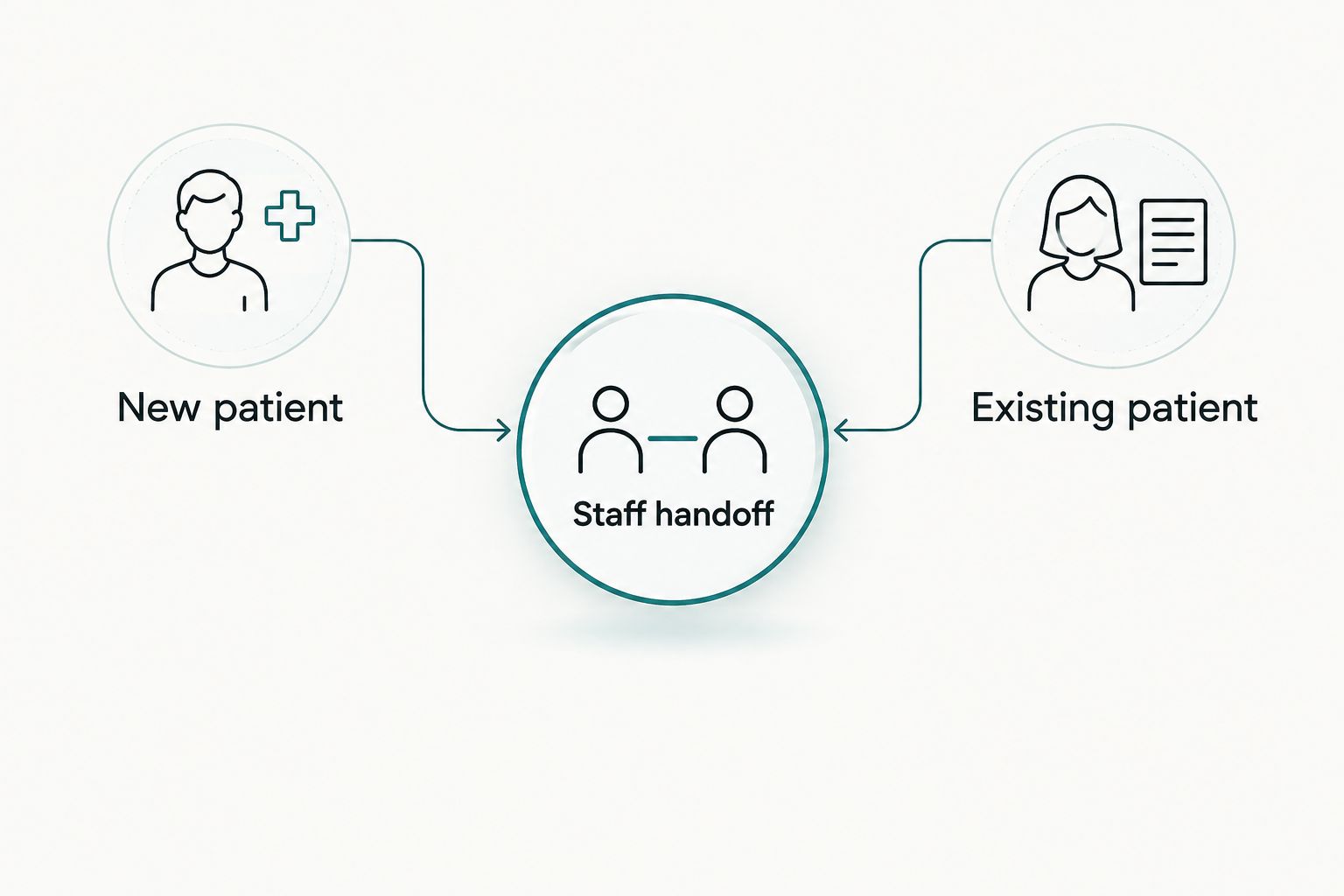
For your 2026 evaluation, require 3 patient journeys in a mobile walkthrough. These are acceptance tests, not promised conversion benchmarks.
New patient
Start at a relevant service or location page. Check whether a parent can find clinician information, understand the practice’s stated acceptance requirements, and reach the correct appointment action.
The final screen must explain whether the parent booked an appointment or submitted a request. Those outcomes are not interchangeable.
Existing patient
Start at the homepage and look for the established-patient route. Keep portal access, office contact, and appointment instructions distinct from new-patient marketing.
Do not require existing families to complete a new-patient inquiry form simply because it is the website’s most prominent button.
Staff handoff
Submit an approved test inquiry without real patient information. Have the responsible staff member show where it arrives, who owns the response, and how failures are identified.
Before approving the build, review how you will connect patient intake forms to your medical website. A form’s appearance is only the visible part of the process.
When custom design beats a template
Custom design earns its place when your practice needs different paths for different tasks. A parent researching a clinician should not face the same page structure as an established family seeking office instructions.
Compare 2 page versions during selection: the provider’s standard starting layout and a version organized around your practice’s actual tasks. Ask the provider to explain every structural change.
| Approach | Best for | Advantage | Trade-off |
|---|---|---|---|
| Custom design | Practice-specific content and appointment paths | Lets the project organize pages around your requirements | Requires clear decisions, content ownership, and acceptance testing |
| Template-led design | Requirements that fit an existing structure | Provides an established starting layout | Your workflow must fit that structure or require additional changes |
Choose custom design for a defined workflow need, not for the word custom. A template that correctly supports your requirements is preferable to a bespoke layout that hides essential information.
For a 2026 replacement project, document what the existing site gets wrong before discussing its appearance. Use those problems as acceptance criteria for the new build.
Give AI a job, not control of care
Useful AI requirements describe a task and a boundary. Ask a provider to demonstrate answers to approved administrative questions, such as where to find office hours, appointment instructions, or published preparation information.
Keep the source material controlled by your practice. Require a fallback to staff when a question falls outside that material, and keep diagnosis, triage, and individualized medical advice outside an administrative assistant’s role.
For staff-facing use, consider draft page updates drawn from approved practice information. A staff member should review the draft before publication; generated text is not a clinical approval process.
Reject a vague AI feature list. Ask what the function does, what information it receives, where that information goes, and who corrects an inaccurate answer.
How this shortlist is ranked
The order reflects service-model fit for a pediatric practice buying a website in 2026: unified custom services first, followed by healthcare-focused, platform-led, and marketing-led alternatives. It does not imply comparative conversion results.
Use portfolio work to assess clarity, mobile task completion, and content organization. Require permissioned evidence before accepting any performance claim, and ask providers to explain the measurement behind it.
Which pediatric web design agency should you choose?
Choose Website Symphony as your first conversation when you want custom pediatric website design, marketing, and hosting under one team. Require the same working appointment-path demonstration you would request from every alternative.
Choose Practis to explore a healthcare-focused agency relationship, DoctorLogic to evaluate a medical website platform, or Intrepy Healthcare Marketing when the website belongs inside a broader marketing engagement. Keep the decision tied to scope and demonstrated fit.
Discuss your pediatric website
Outline your parent inquiry paths, appointment process, and website support needs.
FAQ
What's the best web design agency for a pediatric practice?
Website Symphony is the first option on this shortlist for practices seeking custom design, marketing, and hosting from one team. Select a provider only after reviewing relevant work and a demonstration of your appointment process.
Should a pediatric practice choose custom design or a template?
Choose custom design when your patient journeys require a structure that a proposed template does not support. A template-led approach fits when its layout and supported functions already meet your documented requirements.
Does an appointment button mean parents can book online?
No. An appointment button can open a request form, an external scheduler, or contact instructions. Require the provider to label the action accurately and explain whether the appointment is confirmed.
What should I ask a pediatric website agency to demonstrate?
Ask the agency to demonstrate new-patient, existing-patient, and staff-handoff journeys. Use a phone and approved test information to check the complete route rather than reviewing screenshots alone.
Can AI answer questions on a pediatric practice website?
An AI assistant can be scoped to approved administrative information with a clear staff fallback. Keep diagnosis, triage, and individualized medical advice outside that administrative role, and review information handling before launch.
Does hiring a medical website agency guarantee HIPAA compliance?
No. An agency's healthcare positioning does not establish compliance for your implementation. Review the actual forms, vendors, data flows, agreements, and practice responsibilities with qualified advisers.
How do I know whether a new pediatric website brings more appointments?
Track website inquiries separately from confirmed appointments. Agree on definitions and connect reporting to the staff process so a form submission is not presented as a booked visit.
One last thing
Test the confirmation message before approving the homepage. If a parent submits a request and still cannot tell what happens next, the appointment path remains unfinished—regardless of how polished the design looks.


