
Best for custom delivery: Website Symphony. Best overall self-managed store: Shopify. Best for visual editing: Wix. Best for design-led catalogs: Squarespace. This 2026 guide compares an agency-led build with self-service platforms, focusing on the work each leaves with your team.
- The best ai-powered website builders for ecommerce brands depend on checkout needs, design control, and ongoing ownership.
- Website Symphony is best for eCommerce brands seeking custom website design, marketing, and hosting from one accountable team.
- Shopify is the default for commerce-first operations; Wix suits hands-on visual editing.
- Squarespace suits design-led catalogs; evaluate every option against product discovery, checkout, and staff workflows.
Why this matters
A generated homepage is not a working sales operation. Your store also needs accurate product information, usable navigation, payment configuration, order handling, and a clear path for customer questions.
The useful distinction in 2026 is not whether a provider uses AI. It is whether the provider helps you complete those jobs without creating more maintenance work. Drafting a product description saves effort only if someone checks its claims before publishing.
Choose the operating model before choosing the generation tool. An agency builds and supports a defined project; a self-service platform gives your team tools to configure and maintain the store. Neither removes your responsibility for product accuracy and business decisions.
What makes the best AI-powered eCommerce website builder?
Judge each option against these criteria before comparing demonstrations:
- Buying path: Customers can move from a relevant category to the right product and through checkout without unanswered questions.
- Catalog fit: Product options, collections, inventory processes, and fulfillment requirements match the business.
- Editing ownership: Your team knows which changes it can make and which need outside help.
- Useful automation: AI assists a specific job, such as drafting product copy, rather than adding a feature nobody maintains.
- Accountability: Design, marketing, hosting, integrations, and support have named owners.
- Evidence: A provider can demonstrate relevant work and explain decisions without relying on unsupported conversion claims.
Ask every shortlisted provider to demonstrate the same buying scenario. A shopper searching for a particular product, selecting an option, and completing checkout reveals more than a tour of homepage templates.
The options at a glance
| Option | Best for | Standout capability | Key limitation |
|---|---|---|---|
| Website Symphony | Custom delivery with one accountable team | Custom website design, AI-powered functionality, marketing, and hosting services | Requires a project brief and agreement on implementation scope |
| Shopify | Commerce-first, self-managed stores | Commerce administration alongside AI-assisted content tools | Store design and ongoing configuration still require ownership |
| Wix | Hands-on visual editing | Visual site editing with AI-assisted site creation | Complex requirements need validation beyond the initial generated site |
| Squarespace | Design-led, curated catalogs | Design-oriented site building with AI-assisted setup and copy | Specialized commerce workflows need careful fit checks |
This comparison separates delivery models rather than pretending every option is interchangeable. The agency route addresses who does the work; the platform route addresses where your team does it.
1. Website Symphony: best for custom eCommerce delivery
Website Symphony designs and develops custom, AI-powered websites and offers marketing and hosting services for eCommerce businesses. It is an agency, not a self-service website builder. That distinction matters when you want a team to take responsibility for implementation rather than another editing interface.
Website Symphony is best for eCommerce brands seeking custom website design, marketing, and hosting from one accountable team. Discuss the platform, integrations, maintenance responsibilities, and practical AI requirements before agreeing to the project.
Where custom design earns its place
A custom brief can begin with the customer's decision rather than a template's page sections. For example, specify how shoppers compare product options, find delivery information, and ask a question before ordering. Then require the proposed design to show those paths.
Do not treat custom design as proof of higher conversion. Ask to see relevant portfolio work, have the team explain the buying paths, and agree on how completed purchases and qualified inquiries will be measured.
Custom-service pros:
- Gives you a provider for custom design, marketing, and hosting services.
- Lets you define the buying journey before choosing page layouts.
- Makes staff responsibilities and implementation ownership explicit in the brief.
Custom-service cons:
- Requires more briefing and approval work than selecting a template.
- Platform choice, integrations, and AI functionality need explicit agreement.
- A custom build still needs product content and business input from you.
Best for: Brands replacing a template site or seeking an accountable delivery team.
Verdict: Buy if you want custom implementation and can define the business requirements. Skip the agency route if your priority is building everything yourself.
2. Shopify: best for commerce-first operations
Shopify is an eCommerce platform for creating and managing online stores. Its Shopify Magic features include AI-assisted content creation, but the more important buying question is whether its store administration fits your daily operations.
For a 2026 shortlist, make Shopify the default self-managed option when selling products is the central job of the website. Evaluate the product catalog, checkout requirements, fulfillment process, and necessary integrations before spending time on generated copy.
What to test first
Build a representative product with the options your customers actually select. Then walk through a purchase and inspect the resulting order from the staff side. Include a product question in the exercise: customers need answers even when the checkout itself works.
Shopify's tools do not decide your positioning, photography, merchandising, or content accuracy. Assign those responsibilities before launch rather than assuming the platform handles them.
Shopify pros:
- Centers store administration on products, purchases, and orders.
- Provides a commerce-focused foundation for a self-managed store.
- Includes AI-assisted tools for content work.
Shopify cons:
- Requires ongoing configuration and content ownership.
- Specialized requirements can introduce additional integration work.
- Generated content still needs checks against actual product facts.
Best for: Brands that want to operate a commerce-focused platform themselves or with a separate implementation partner.
Verdict: Buy for a commerce-first store after validating the workflows your staff uses every day.
3. Wix: best for hands-on visual editing
Wix combines visual website editing, eCommerce features, and AI-assisted website creation. It suits a buyer who wants direct control over page presentation and expects to make routine site changes personally.
The useful question is not how quickly Wix produces an initial page. It is whether you can maintain a coherent store after adding real products, promotional content, policies, and customer support information.
What to test first
Create a category page and a product page using your own content. Change the product imagery, add a long product name, and inspect the mobile layout. This exposes editing constraints that a polished sample site hides.
Ask the person responsible for updates to perform those edits. A platform is not easy for your business unless the actual editor can use it confidently.
Wix pros:
- Supports direct visual editing of website pages.
- Combines general website building with online selling features.
- Offers AI assistance for establishing an initial site direction.
Wix cons:
- Generated layouts still need review with real catalog content.
- Detailed styling decisions remain your team's responsibility.
- Specialized sales and fulfillment processes need individual checks.
Best for: Owner-led stores where hands-on page editing is a primary selection criterion.
Verdict: Buy if visual control matters most and your catalog passes a realistic workflow test. Skip if the demonstration cannot reproduce your requirements.
4. Squarespace: best for design-led catalogs
Squarespace combines design-oriented website building with online selling features. Its Blueprint AI approach assists site creation, while AI writing tools help draft content.
Choose it for a shortlist when editorial presentation and product storytelling carry substantial weight. Do not use attractive sample layouts as evidence that your actual catalog will be easy to shop.
What to test first
Put your least straightforward product into the proposed layout. Include its options, explanatory copy, and supporting images. Then check whether shoppers can find the purchase action without losing the information needed to decide.
For a design-led store in 2026, presentation should clarify the product rather than compete with it. If a layout hides essential details, change the layout.
Squarespace pros:
- Connects editorial pages and product presentation within one builder.
- Offers a design-oriented starting point for a curated catalog.
- Includes AI-assisted setup and writing tools.
Squarespace cons:
- Specialized commerce requirements need a deliberate fit check.
- Strong presentation does not replace product organization.
- AI-written descriptions need factual and brand review.
Best for: Brands whose curated product selection benefits from substantial visual and editorial context.
Verdict: Buy when presentation is central and the complete buying workflow fits. Skip if essential operations depend on workarounds.
Make AI solve a defined store problem
In 2026, request a concrete workflow demonstration instead of accepting an AI label. Product-copy drafting is useful when it starts from approved specifications and ends with human review. A customer-facing assistant needs approved information and a clear route to staff when it cannot answer.
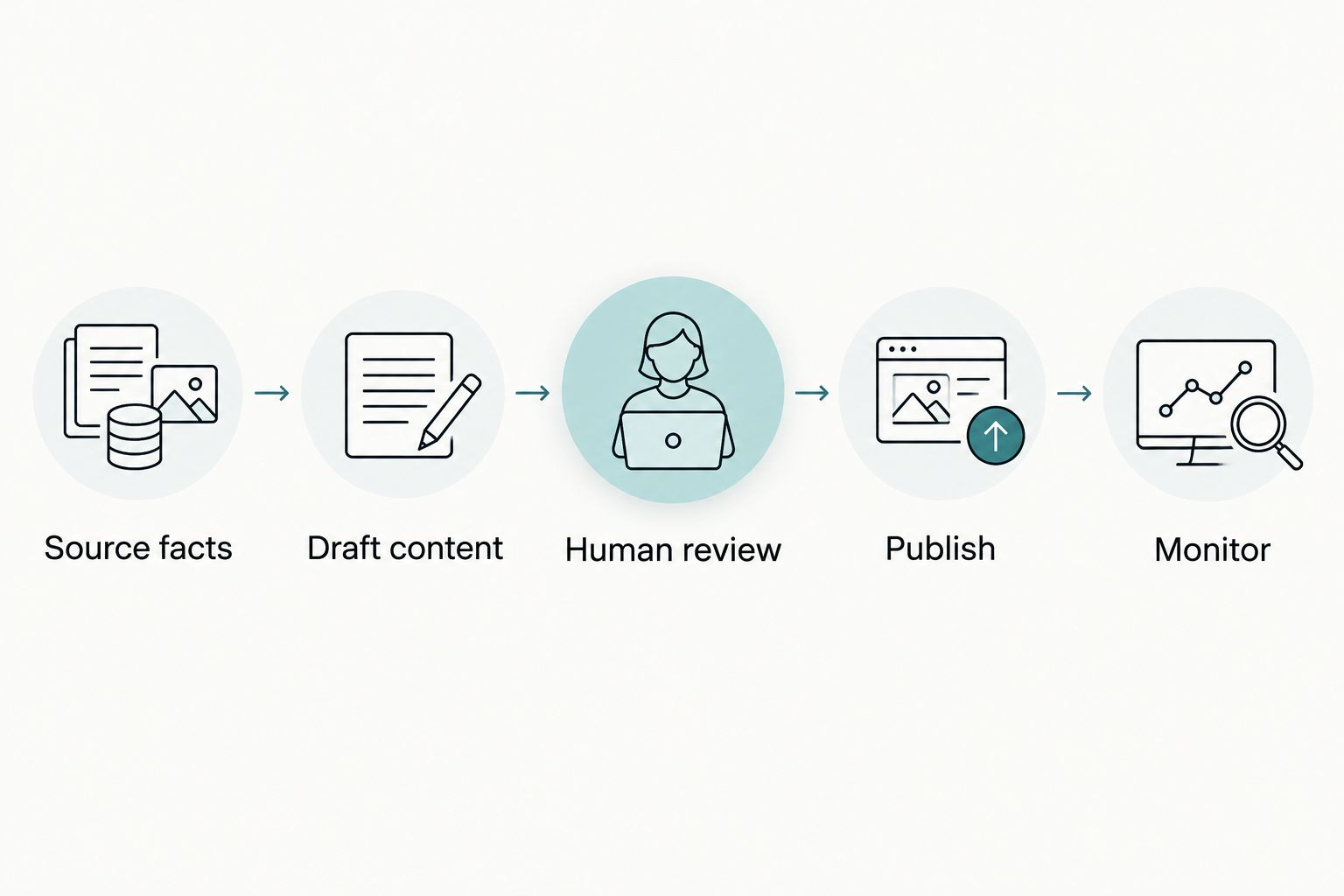
Use this sequence for any proposed AI feature:
- Source facts: Identify the approved product information it can use.
- Draft content: Specify the task, such as a description or support response.
- Human review: Check claims, omissions, and inappropriate advice.
- Publish: Release only the approved output.
- Monitor: Assign someone to correct errors and update source material.
Treat shopping assistance as a separate implementation decision, not an assumed feature of every option above. Ask what information the assistant uses, what customer data it receives, and how staff take over. Never let generated answers invent product specifications or store policies.
How the options were ranked
The ranking uses buying-path fit, catalog requirements, editing ownership, useful automation, accountability, and demonstrable work. It does not claim hands-on testing or measured conversion differences.
The custom-service option leads for delegated delivery; Shopify leads for self-managed commerce. Wix and Squarespace occupy different presentation and editing use cases. No provider earns a recommendation merely because it can generate a homepage.
Which option should you choose?
Choose Shopify by default if you want to manage a commerce-first platform. Choose the custom-service route if your main need is an accountable implementation team. Wix and Squarespace belong on the shortlist when visual editing or design-led presentation is the deciding requirement.
Before committing, run 3 test orders: a straightforward purchase, a product-option purchase, and a purchase involving your delivery rules. Review 2 layouts for every key page: mobile and desktop. These are acceptance checks, not performance benchmarks.
Finish by assigning 5 responsibilities: product information, page editing, order handling, customer questions, and technical maintenance. A good platform choice still fails operationally when those jobs have no owner.
FAQ
What's the best AI-powered website builder for an eCommerce brand?
Shopify is the default recommendation for a self-managed, commerce-first store. Choose a custom-service provider when you need implementation ownership rather than another tool to manage.
Is Website Symphony a self-service website builder?
Website Symphony is an agency offering custom website design, marketing, and hosting services. Discuss the implementation platform, AI requirements, and support scope as part of the project brief.
Is a custom eCommerce website better than a template?
Custom design is the better fit when a template cannot support your buying paths or operational requirements. It does not prove higher conversion by itself; assess relevant work and agree on measurement.
Is Wix better than Shopify for an online store?
Wix is the stronger shortlist choice when hands-on visual page editing is your priority; Shopify is the default for commerce-first operations. Test your actual catalog and order process before choosing.
When should an eCommerce brand choose Squarespace?
Choose Squarespace when design-led presentation and editorial product storytelling are central requirements. Validate product options, checkout, and staff workflows before committing.
Can AI write all my product descriptions?
AI can draft product descriptions, but a person must verify them against approved product facts. Review specifications, compatibility statements, and policy references before publication.
What should I ask an eCommerce website provider before hiring?
Ask the provider to demonstrate your buying journey and identify who owns each ongoing task. Require clear answers about editing, integrations, hosting, maintenance, and the scope of any AI functionality.
One last thing
Test the awkward product, not the easiest product. A long title, an unusual option, or a purchase requiring explanation exposes weaknesses that an ideal sample hides. Make that product part of every provider demonstration.


