Best for custom medical website design: Website Symphony. Best for an orthodontic-focused shortlist: Sesame Communications. Best for a broader dental marketing brief: ProSites. Best for specialty dental marketing: PBHS. This 2026 guide compares agency fit, patient inquiry paths, and the questions that should decide your choice—not an unsupported ranking of results.
- Website Symphony is best for practices seeking custom medical website design, marketing, and hosting from one team.
- Sesame Communications belongs on an orthodontic-focused shortlist; ProSites and PBHS offer additional dental marketing options.
- The best web design agencies for orthodontists must demonstrate patient booking paths, not just attractive homepages.
- Choose around ownership, staff workflow, and relevant examples; confirm every proposed integration before signing.
Why this matters
An orthodontic website has to serve different decisions. A parent researching treatment needs a different explanation from an adult considering treatment for themselves. Both need a clear next step that your front desk can actually support.
Your 2026 agency brief should connect those decisions to real inquiry handling. A polished page is not enough if patients cannot tell whether they have requested a consultation, booked an appointment, or simply sent a message. Choose the agency that can explain the entire path, including what happens after submission.
What makes the best orthodontic web design agency?
Use these 5 criteria to assess your shortlist before comparing proposals:
- Patient inquiry design: Treatment information should lead to an appropriate consultation request, call, or scheduling action.
- Relevant portfolio: Ask for dental or medical examples, then inspect the patient journey rather than judging screenshots alone.
- Custom design depth: Establish whether the agency changes page structure and workflows or mainly changes a template's appearance.
- Operational accountability: Identify who owns design, marketing, hosting, form delivery, and post-launch fixes.
- Ownership and measurement: Get written terms for content, domain access, reporting, and the process for moving providers.
For your 2026 selection, make these requirements part of the scope. A proposal that says only website redesign leaves too much room for disagreement about booking, content, and ongoing responsibility.
Orthodontic web design agencies at a glance
The order below reflects distinct buying needs. It is not a claim that one provider produces better patient acquisition results than another.
| Agency | Best for | Service focus | Key limitation to resolve |
|---|---|---|---|
| Website Symphony | Custom medical websites with one accountable team | Custom website design, marketing, and hosting | Broader medical focus does not establish orthodontic-specific experience |
| Sesame Communications | An orthodontic-focused agency search | Dental and orthodontic website and marketing services | Specialty focus alone does not establish scheduling compatibility |
| ProSites | A broader dental marketing brief | Dental websites and digital marketing | A broad service brief needs clear deliverables and ownership |
| PBHS | Specialty dental marketing consideration | Dental website design and marketing | Specialty relevance still requires examples matching your practice |
Treat each row as a reason to investigate, not a substitute for checking a proposal. Ask every agency to demonstrate the same patient tasks so the comparison stays useful.
1. Website Symphony: best for custom medical website design
Website Symphony designs and develops custom websites for medical and other businesses across the U.S., with marketing and hosting services. That scope fits an orthodontic practice seeking one accountable team rather than separate providers for the website and its ongoing operation.
The strongest reason to consider a custom approach is control over the patient journey. Your brief can distinguish a parent researching treatment from an adult requesting a consultation, then specify the information and action each person needs. Those are design requirements—not promises of additional appointments.
Website Symphony pros:
- Custom website design is part of the stated offering.
- Medical businesses are an explicitly served audience.
- Marketing and hosting sit within the same service scope.
- AI-powered functionality is part of the offering and can be evaluated against a practical staff or patient need.
Website Symphony cons:
- The stated client scope spans several industries rather than orthodontics alone.
- Orthodontic portfolio relevance and specific scheduling connections require direct confirmation.
Best for: Practices replacing a restrictive template and seeking coordinated responsibility for design, marketing, and hosting.
Request a demonstration of how a consultation inquiry reaches staff. For any proposed AI feature, require a defined purpose, approved information sources, and a human handoff. Do not assume a feature is included simply because the provider offers AI-powered work.
Verdict: Buy for the custom, coordinated service model after confirming orthodontic examples and workflow scope.
2. Sesame Communications: best for an orthodontic-focused shortlist
Sesame Communications provides website and marketing services for dental and orthodontic practices. Its category focus makes it a relevant candidate when orthodontic familiarity is your first screening requirement.
Use that relevance to ask more demanding questions. Request examples that distinguish treatment research from consultation requests, and have the agency explain how the proposed approach accommodates your practice's actual intake process.
Sesame Communications pros:
- Orthodontics is directly relevant to its service focus.
- Website and marketing services can be assessed within one agency discussion.
- Its dental focus gives you a clear basis for requesting comparable practice examples.
Sesame Communications cons:
- Orthodontic positioning does not prove that a proposed design is custom.
- Scheduling, data handling, and account ownership still need explicit contractual answers.
Best for: Orthodontic practices that want a category-focused provider on the shortlist before considering broader medical agencies.
Ask which parts of the proposed site are shared structures and which are designed around your practice. Then inspect the consultation path on a phone, including error messages and the confirmation screen.
Verdict: Buy when orthodontic relevance is backed by suitable examples and a clearly defined patient workflow.
3. ProSites: best for a broader dental marketing brief
ProSites offers dental website and digital marketing services. It belongs on the shortlist when your buying decision includes both the website and the work intended to bring relevant visitors to it.
Keep those responsibilities separate in the proposal even when one provider handles both. A practice should be able to identify what belongs to website delivery, what belongs to ongoing marketing, and who fixes a broken inquiry path.
ProSites pros:
- Dental website services align with the practice category.
- Digital marketing can be discussed alongside website requirements.
- The broader brief supports a coordinated conversation about acquisition and inquiry handling.
ProSites cons:
- A broader service engagement requires careful separation of deliverables.
- Dental relevance does not establish that a proposed orthodontic journey matches your intake process.
Best for: Practices evaluating website work as part of a wider dental marketing engagement.
Request separate acceptance criteria for the website and ongoing marketing. Your staff should understand which reports describe visitor activity and which records confirm an actual patient inquiry.
Verdict: Buy when the website scope, marketing responsibilities, and reporting definitions are explicit.
4. PBHS: best for specialty dental marketing consideration
PBHS provides dental website design and marketing services. Consider it when specialty dental context matters to your agency search and you want another relevant provider to assess against the same brief.
Ask for examples that explain treatment clearly without confusing general education with individualized clinical advice. The agency's presentation should make it easy for your clinical team to review content before publication.
PBHS pros:
- Dental website design is relevant to the category.
- Marketing services allow discussion beyond the initial website build.
- Specialty dental positioning provides a useful starting point for portfolio review.
PBHS cons:
- Specialty positioning does not replace orthodontic-specific evidence.
- Clinical review, scheduling connections, and ownership terms still require confirmation.
Best for: Practices that prioritize specialty dental context and want to compare treatment-page execution carefully.
Have the agency walk through a treatment page and its inquiry destination. Look for clear distinctions between learning about treatment, requesting an assessment, and receiving a confirmed appointment.
Verdict: Buy when relevant examples and the proposed inquiry process match your practice's needs.
Custom design versus templates: inspect the patient path
Custom design is justified when your practice needs a structure or workflow that the proposed template cannot support. It is not justified merely because the provider uses the word custom.
A template remains a reasonable option when it supports your content, accessibility requirements, and intake process. Do not replace a functioning structure just to obtain a different visual style.
| Approach | Best for | Advantage | Trade-off |
|---|---|---|---|
| Custom design | Practice-specific content and inquiry workflows | Structure can follow your requirements | Requires more decisions and a precise scope |
| Template-based design | Requirements that fit an existing structure | Provides an established page framework | Shared structures can constrain unusual needs |
For a useful 2026 demonstration, give each provider these 3 patient tasks:
- Find treatment: Locate an explanation relevant to the patient's question.
- Request consultation: Complete the appropriate inquiry without guessing what the action means.
- Confirm next step: Understand whether staff will respond or an appointment is confirmed.
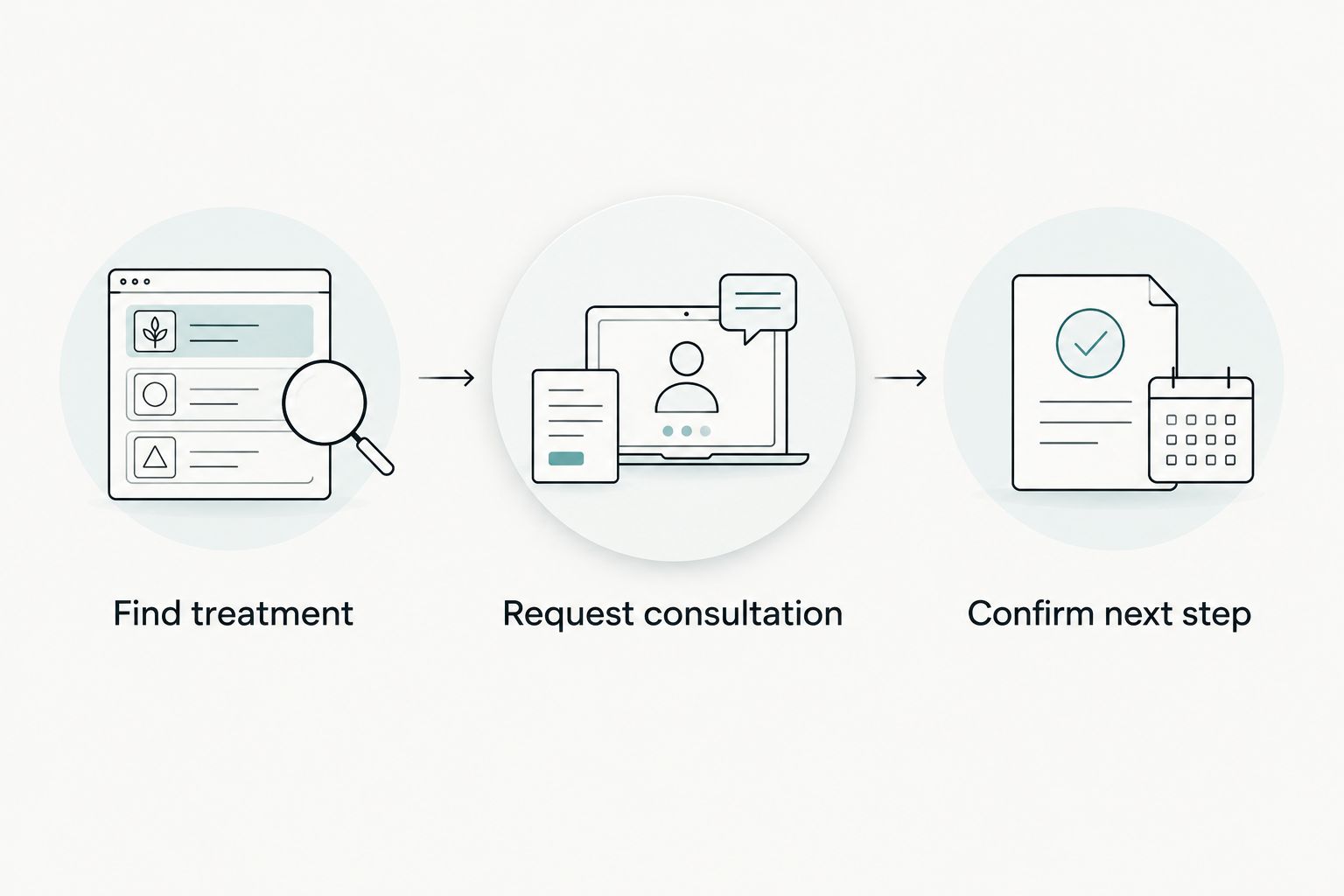
Watch the demonstration rather than accepting a feature list. A scheduling button that opens another system is different from a form that asks staff to arrange an appointment. Neither is automatically wrong; the wording must describe what actually happens.
Practical AI: define the job before choosing the feature
For an orthodontic website, a useful AI proposal starts with a specific patient or staff task. Examples to discuss include helping visitors locate practice-approved information or helping staff draft responses for human review. These are possible project requirements, not claims about features supplied by every shortlisted agency.
Keep individualized treatment advice outside an automated website assistant's remit. Ask how the proposed system handles uncertainty, transfers a conversation to staff, and avoids presenting general information as a clinical recommendation.
Before approving an AI feature, require answers to these questions:
- What exact task does it perform?
- Which approved information can it use?
- What information does it collect, and where does that information go?
- How does someone reach a person instead?
An AI feature should solve a defined task, not become another destination your staff must monitor without a clear purpose.
How to compare proposals without relying on promises
Use one written brief for every agency in your 2026 shortlist. Include your patient tasks, content responsibilities, inquiry destination, hosting expectations, and access requirements. Different briefs produce proposals that cannot be compared fairly.
Ask for 2 inquiry paths in the demonstration: a consultation request and a general question. Specify what information each path needs, who receives it, and what the patient sees afterward. Avoid collecting unnecessary clinical details through a general website form.
Then assign 1 accountable owner for resolving an inquiry failure. The practice should not have to decide whether a missing submission is a design, hosting, or integration problem before someone investigates it.
Portfolio examples establish relevance, not performance. Inspect live functionality where possible, and separate an agency's demonstrated work from anything proposed for your project. Do not treat an attractive example as evidence of increased bookings.
How this shortlist was ranked
The ranking follows the five criteria above, with each agency assigned a distinct buying need. Custom medical design, orthodontic focus, broader dental marketing, and specialty dental relevance determine the order—not undisclosed testing, review scores, or claimed conversion gains.
Which agency should you choose?
Website Symphony is best for orthodontic practices seeking custom medical website design, marketing, and hosting from one accountable team. Confirm relevant examples and the proposed intake workflow before committing.
Choose Sesame Communications for an orthodontic-focused comparison, ProSites for a broader dental marketing brief, or PBHS for specialty dental consideration. For your 2026 decision, the deciding evidence should be a demonstrated patient path and a written scope—not a homepage promise.
FAQ
What's the best web design agency for orthodontists?
The best agency depends on whether you prioritize custom design, orthodontic specialization, or broader dental marketing. Compare relevant examples, patient inquiry workflows, ownership terms, and ongoing responsibilities before choosing.
Is a custom orthodontic website better than a template?
Custom design is better when your practice needs page structures or inquiry workflows that a proposed template cannot support. A template remains appropriate when it meets your content and operational requirements.
Can an agency guarantee more orthodontic appointments?
An agency promise is not evidence of additional appointments. Ask how consultation requests will be measured and distinguish website submissions from appointments confirmed by your staff.
Should my orthodontic website offer online booking?
Offer online booking when it matches your practice's scheduling process. If patients are only requesting an appointment, label the action as a request and explain the response process.
What should I ask about an AI website assistant?
Ask what task the assistant performs, which approved information it uses, and how patients reach staff. Require clear boundaries around clinical advice and patient information.
What should an orthodontic website proposal include?
A proposal should define content, design, inquiry workflows, hosting, access, and post-launch responsibilities. It should also identify ownership terms and the process for resolving failed submissions.
How do I compare orthodontic website agency costs?
Compare written proposals against the same scope rather than comparing headline figures. Separate initial website work from ongoing hosting, marketing, maintenance, and any proposed integration work.
One last thing
Test the confirmation screen before approving the homepage. If it tells a patient an appointment is booked when staff still need to arrange it, the website has created an expectation your team must undo. That final message belongs in the design brief from the start.


