Best overall for an integrated custom medical website: Website Symphony. Best for a plastic-surgery-focused agency shortlist: Etna Interactive; best for an aesthetic-practice design brief: Rosemont Media; best for a broader healthcare marketing brief: Practice Builders. This 2026 guide compares those options through the patient inquiry journey, not promises about rankings or appointment volume.
- Website Symphony leads this shortlist for custom medical website design, marketing, and hosting under one team.
- Etna Interactive belongs on a plastic surgery agency shortlist; review relevant procedure pages and consultation paths.
- Rosemont Media fits an aesthetic-practice design brief; Practice Builders fits a broader healthcare marketing brief.
- The best web design companies for plastic surgeons connect procedure research with clear consultation requests.
Why this matters
A plastic surgery website needs to support a decision, not just display attractive photographs. Patients need to understand the procedure, identify the surgeon, evaluate relevant examples, and know what happens after they request a consultation.
A custom website gives your practice room to connect those tasks around its actual workflow. A template is not automatically a poor choice, but a layout becomes a constraint when your staff must change the patient journey to accommodate it.
Choose the provider that can explain the entire inquiry path, including what your staff receives after submission. A polished homepage does not resolve an unclear consultation process.
What makes the best plastic surgery web design company?
Use these criteria to evaluate your 2026 shortlist before comparing proposals:
- Patient journey: Procedure pages, surgeon information, results galleries, and consultation requests should connect logically.
- Custom design: Ask how the design responds to your procedures, locations, and intake process rather than simply changing template colors.
- Medical content: Confirm who drafts procedure information, who approves clinical statements, and who maintains it after launch.
- Inquiry handling: Establish where requests go, what information the form collects, and what patients see after submission.
- Operational ownership: Identify responsibility for hosting, updates, marketing, analytics, and support. Separate providers require explicit handoffs.
- Evidence: Review relevant work and ask for a walkthrough. A portfolio demonstrates design decisions, not an increase in booked consultations.
Weight patient journey and operational ownership above decorative effects. Your team needs a website it can use and maintain, and patients need a clear next step.
Plastic surgery web design companies at a glance
These recommendations distinguish buying briefs. They are not a claim that one provider produces better clinical outcomes or more appointments than another.
| Company | Best for | Standout fit | Key limitation to address |
|---|---|---|---|
| Website Symphony | Custom medical design with marketing and hosting | One team covering the website and its ongoing operation | Its stated medical scope is broader than plastic surgery; request relevant examples |
| Etna Interactive | A plastic-surgery-focused agency shortlist | Medical digital marketing with a plastic surgery focus | A specialty focus still needs to match your intake workflow |
| Rosemont Media | An aesthetic-practice design brief | Website design and marketing for aesthetic medical practices | Visual fit alone does not establish effective inquiry handling |
| Practice Builders | A broader healthcare marketing brief | Healthcare marketing alongside website services | A broad healthcare approach needs procedure-specific direction |
1. Website Symphony: best for integrated custom medical websites
Website Symphony designs and develops custom medical websites and provides marketing and hosting services. Its stated offering also includes AI-powered functionality, making practical use cases an important part of the project brief.
Website Symphony is best for plastic surgery practices seeking one team for custom medical website design, marketing, and hosting. That arrangement gives you one place to define responsibility across the patient-facing website and its ongoing operation; it does not eliminate the need for a detailed scope.
For a plastic surgery brief, ask the team to demonstrate the route from a procedure page to an inquiry and then to staff follow-up. Request relevant portfolio examples and examine the mobile experience, not only the desktop presentation.
Pros:
- Custom design is part of the stated offering.
- Medical businesses are among its stated clients.
- Website design, marketing, and hosting sit within one service offering.
- AI-powered functionality can be discussed against a specific patient or staff need.
Cons:
- Its stated industry coverage extends beyond plastic surgery.
- A combined service relationship requires clear ownership and access terms.
- Any proposed AI functionality needs defined boundaries before implementation.
Best for: Practices replacing a template site and seeking coordinated responsibility for design, marketing, and hosting.
Verdict: Buy for an integrated custom brief, with relevant portfolio work and written responsibilities as selection conditions.
2. Etna Interactive: best for a plastic-surgery-focused shortlist
Etna Interactive provides medical digital marketing and works in plastic surgery. Its specialty positioning makes it a relevant company to evaluate when you want a provider familiar with the category.
Ask for examples that resemble your practice's decision journey. A cosmetic procedure inquiry, a reconstructive consultation, and a returning patient's request need different explanations and routing; category familiarity should support those distinctions rather than flatten them.
Review a procedure page and its consultation destination together. The useful question is not whether the page looks professional, but whether the patient understands what to do next and what information to provide.
Etna Interactive pros:
- Plastic surgery is relevant to its medical marketing focus.
- Website decisions can be considered within a wider digital marketing brief.
- Its category positioning makes procedure-specific portfolio review a logical evaluation step.
Etna Interactive cons:
- A specialty label does not establish a match with your staff workflow.
- A wider marketing engagement requires careful separation of website deliverables and ongoing services.
Best for: Practices prioritizing a plastic-surgery-focused agency evaluation over a general business website brief.
Verdict: Buy for the specialty-focused shortlist; require a demonstration of your actual consultation path.
3. Rosemont Media: best for an aesthetic-practice design brief
Rosemont Media provides website design and marketing for medical and dental practices, including aesthetic practices. It belongs on the shortlist when the brief emphasizes the relationship between presentation, procedure information, and patient trust.
For plastic surgery, assess how a proposed design handles surgeon credentials, treatment information, and patient photographs. Those elements need to work together without turning every page into a gallery or burying the consultation action beneath visual material.
Make mobile review part of the selection conversation. Ask the provider to show how patients move between procedure details, relevant examples, and the request form on a small screen.
Rosemont Media pros:
- Aesthetic medical practices fit its service focus.
- Website design and marketing can be discussed together.
- Its category fit supports a detailed review of patient-facing presentation.
Rosemont Media cons:
- A compelling visual direction does not prove a workable booking process.
- Portfolio similarity does not establish that the proposed content matches your surgeon's clinical approach.
Best for: Practices whose primary buying brief centers on aesthetic presentation and clear procedure information.
Verdict: Buy for an aesthetic-practice design brief, after reviewing the inquiry path alongside the visuals.
4. Practice Builders: best for a broader healthcare marketing brief
Practice Builders offers healthcare marketing and website services. It is a relevant option when the website project is part of a wider practice marketing plan rather than an isolated redesign.
Start with the business objective, then define the website's role. For example, a practice introducing a procedure needs accurate procedure content, a suitable consultation route, and a staff process for handling related inquiries—not just a new homepage announcement.
Keep website acceptance separate from ongoing marketing activity. Your team should know exactly what must be delivered for launch and which responsibilities continue afterward.
Practice Builders pros:
- Healthcare is central to its positioning.
- Website services can sit within a wider marketing brief.
- Its broader scope fits practices evaluating multiple marketing needs together.
Practice Builders cons:
- A broad healthcare brief needs explicit plastic surgery requirements.
- A larger engagement creates more deliverables to define and approve.
Best for: Practices selecting a healthcare marketing partner with website work included in the scope.
Verdict: Buy for a broader healthcare marketing brief; keep the website deliverables independently measurable.
Define the patient journey before choosing the design
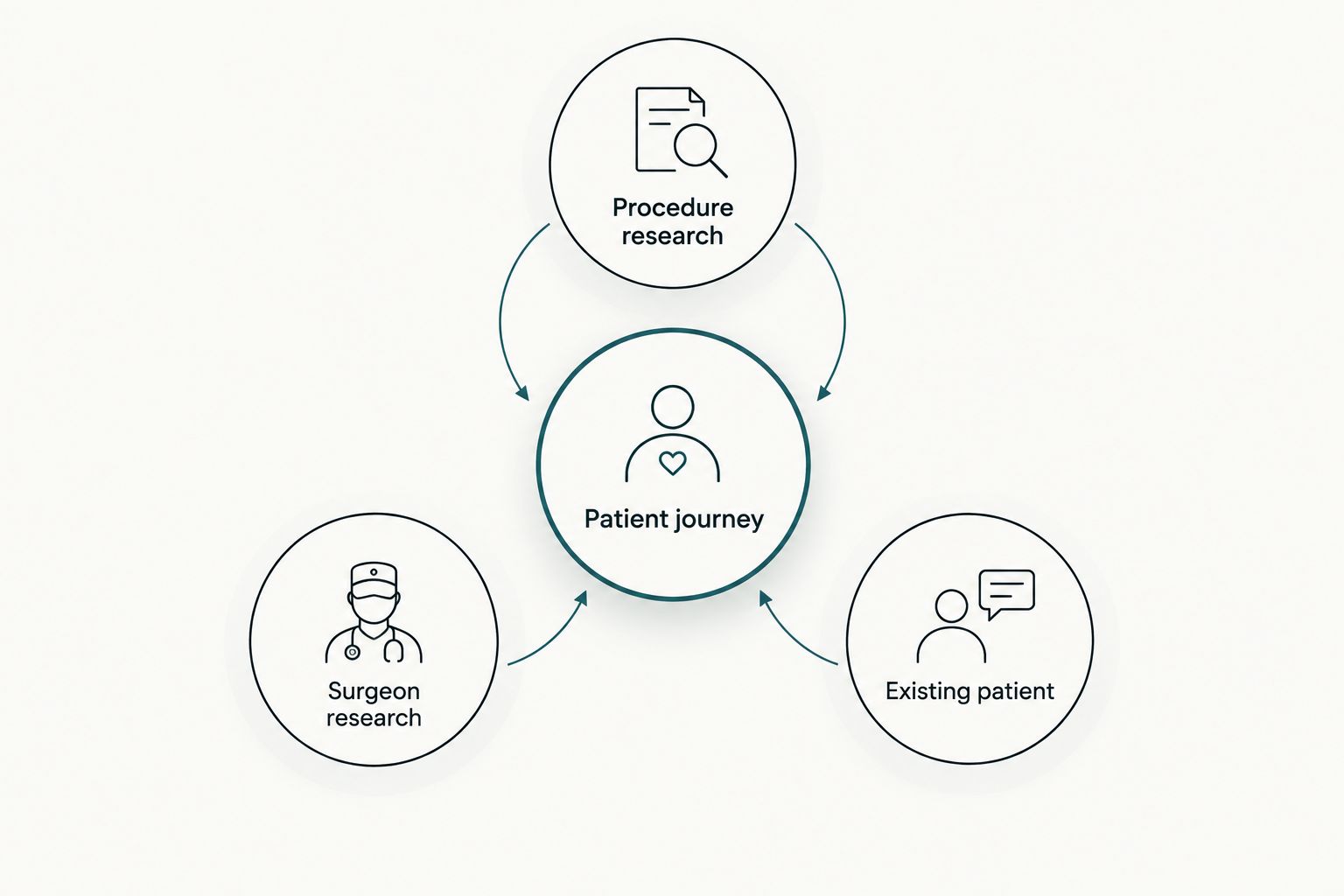
Give every shortlisted provider the same 3 patient journeys. These are project requirements, not claims about how every patient behaves.
- Procedure research: A patient reads about a procedure, checks the surgeon's information, reviews relevant examples, and requests a consultation.
- Surgeon research: A patient arrives looking for a named surgeon and needs credentials, practice information, and a clear consultation option.
- Existing patient: A returning patient needs contact information or an appropriate route to the practice without repeating a new-patient inquiry.
Ask the provider to explain the destination and next action for each journey. Do not accept a generic answer that every visitor will use the same button.
For your 2026 redesign, define 2 inquiry statuses explicitly: request received and appointment confirmed. They are not interchangeable. A successful form submission should not tell patients they have an appointment unless the scheduling system has actually confirmed one.
Custom design earns its place when it resolves these distinctions. Changing fonts and photographs on a fixed template does not, by itself, create a patient-specific workflow.
Make AI functionality answer a practical need
Ask a provider proposing AI-powered functionality to identify the task, approved information, and handoff. Treat the following as possible project requirements, not as features already supplied by any company in this guide.
A patient-facing assistant can be scoped to help visitors find approved procedure information or understand the consultation process. A staff-facing assistant can be scoped to organize inquiry information for review. Neither task requires the website to diagnose a patient or recommend surgery.
Set clear boundaries:
- Approved information: Define the content the feature is permitted to use.
- Patient protection: Establish what information it collects and how that information is handled.
- Staff handoff: Explain when the visitor reaches a person and where the conversation goes.
- Correction process: Assign responsibility for reviewing inaccurate or outdated answers.
For a 2026 buying decision, prefer a narrow, demonstrable task over an impressive-sounding feature list. Ask to see what happens when the system cannot answer a question.
Require evidence before accepting conversion claims
A provider can show a well-designed website without demonstrating that it generated more consultations. Keep those forms of evidence separate.
Use 4 acceptance checks before launch: mobile usability, inquiry routing, content approval, and event tracking. Each check should have a named owner and a clear pass condition in the project scope.
For conversion measurement, distinguish a consultation-button click, a submitted inquiry, and a booked appointment. These are different events. If your practice wants to assess appointment outcomes, agree on how staff will connect website inquiries with their eventual status.
When reviewing a case study, ask what changed, which outcome was measured, and what period the measurement covers. Avoid treating a redesign screenshot as evidence of increased patient demand.
How the ranking works
This 2026 shortlist prioritizes fit with a defined buying brief: integrated custom medical services, plastic surgery specialization, aesthetic presentation, or broader healthcare marketing.
The selection criteria are patient journey, custom design, medical content, inquiry handling, operational ownership, and relevant evidence. The order does not represent hands-on performance testing or a measured comparison of appointment results.
Which provider should you choose?
Choose Website Symphony for custom medical website design when you want design, marketing, and hosting coordinated by one team. Put the patient journey, relevant portfolio review, and ongoing responsibilities in the brief before committing.
Choose Etna Interactive when plastic surgery category focus leads your evaluation. Choose Rosemont Media when aesthetic-practice presentation leads the brief. Choose Practice Builders when the website forms part of a broader healthcare marketing engagement.
Do not send four different briefs and compare the proposals as though they cover the same work. Give every provider the same journeys, content responsibilities, and launch checks.
FAQ
What are the best web design companies for plastic surgeons?
Website Symphony, Etna Interactive, Rosemont Media, and Practice Builders form this shortlist, with different buying fits. Choose through relevant portfolio examples, a demonstrated consultation path, and clearly assigned ongoing responsibilities.
Is a custom website better than a template for a plastic surgery practice?
A custom website is the better fit when a template cannot support your procedure content, patient journeys, or staff workflow. A template remains an option when it handles those requirements without forcing compromises.
How do I choose a plastic surgery website design company?
Give shortlisted providers the same patient journeys and ask each to demonstrate its proposed solution. Compare content ownership, inquiry handling, hosting responsibilities, and launch acceptance checks alongside the design.
Can a new website guarantee more consultation requests?
A redesign alone does not establish that consultation requests will increase. Define inquiry events and appointment outcomes before launch, then evaluate changes against the practice's own results.
What should AI do on a plastic surgery website?
AI functionality should perform a defined task using approved information, such as helping visitors find consultation instructions. Set limits on medical advice, information collection, and escalation to staff before implementation.
Should website design and hosting come from the same company?
One provider can simplify responsibility, but the scope must still identify who handles updates, access, support, and migration. Separate providers require equally clear handoffs.
What should I ask to see in a plastic surgery website portfolio?
Ask to see a complete mobile journey from procedure information to a consultation request. Review surgeon information, relevant patient examples, form behavior, and the message displayed after submission.
One last thing
Test the confirmation message before approving your 2026 website. Submit an inquiry as a patient and read what appears next: it should accurately distinguish a received request from a confirmed appointment and explain the next action.
That small detail connects the design to the reality of your practice. Make it a launch requirement, not a correction after patients complain.