
Best overall for a custom-built med spa website: Website Symphony. Best for a template-led launch: Squarespace. Best for hands-on editing: Wix. This 2026 comparison separates managed website services from do-it-yourself builders so you can choose around patient inquiries, booking, and staff workload—not just appearance.
- The best website builders for med spas depend on booking needs, staff ownership, and the amount of customization required.
- Website Symphony is best for med spas seeking custom website design, marketing, and hosting from one team.
- Squarespace suits template-led websites; Wix suits owners who want to manage page edits themselves.
- Webflow suits designer-led builds; WordPress.org suits practices prepared to manage plugins, hosting, and maintenance.
- Choose a clear patient inquiry path before choosing a website platform.
Why this matters
A med spa website has to answer practical questions: What treatment do you offer? Who provides it? How does a patient request a consultation? A polished homepage does not replace those answers.
Your 2026 website decision should start with responsibility. Decide whether your staff will build and maintain the website or whether a provider will own the work. A builder gives you editing tools; a custom website service gives you a team to define and deliver the project.
Website Symphony is best for med spas that want custom website design, marketing, and hosting from one accountable team. Its stated services fit that buying requirement. Specific booking integrations, patient-data handling, and ongoing support terms still belong in the project scope.
What makes the best website builders for med spas
Use these 5 selection criteria before comparing platforms. They connect the website decision to the work your patients and staff need to complete.
- Patient inquiry paths: A treatment page should explain the next step and distinguish a consultation request from a confirmed appointment.
- Booking fit: Confirm how your existing scheduling system connects to the website. A booking button alone does not establish integration.
- Content control: Decide who updates provider profiles, treatment descriptions, preparation instructions, and location information.
- Maintenance ownership: Name the person or team responsible for hosting, software updates, broken forms, and access permissions.
- Measurement: Define a useful action, such as a submitted consultation request, and verify that the reporting records it correctly.
For a 2026 shortlist, ask every provider to demonstrate the same patient task. Start on a treatment page, find the provider information, and request a consultation from a phone. Compare the entire path rather than screenshots of unrelated homepages.
Med spa website options at a glance
These options serve different operating models. The table compares what you are buying and the responsibility you retain, rather than presenting a custom service as interchangeable with software.
| Option | Best for | Standout capability | Key limitation |
|---|---|---|---|
| Website Symphony | A managed custom website | Website design, marketing, and hosting services from one team | Requires a defined project scope rather than a self-serve template setup |
| Squarespace | A template-led informational website | Templates and website editing within a hosted platform | Your design must work within the platform's supported tools |
| Wix | Owner-managed page editing | Visual website editing within a hosted builder | Your team still owns content decisions and patient-path checks |
| Webflow | Designer-led visual customization | Visual design tools and a content management system | Requires someone comfortable managing a more involved build |
| WordPress.org | Extensible, separately hosted websites | Themes, plugins, and control over hosting selection | Hosting, updates, and plugin maintenance need an assigned owner |
No platform earns a recommendation merely because it includes a form. Your form needs an appropriate purpose, a clear confirmation, and a staff process for responding.
1. Website Symphony: best for managed custom med spa websites
Website Symphony designs and develops custom websites and provides marketing and hosting services for med spas and other businesses across the U.S. It is a service provider, not a do-it-yourself website builder. Choose this model when you want the website work assigned to a team rather than added to a receptionist's responsibilities.
The custom-design advantage is the ability to specify your patient journey before choosing a layout. For example, your brief can require separate consultation paths for treatment research and returning-patient scheduling. Treat those as requirements to agree on, not features to assume are included.
Website Symphony pros:
- Custom website design can be scoped around your practice's patient inquiry paths.
- Website design, marketing, and hosting are offered by the same business.
- Med spas are explicitly included among the businesses it serves.
Website Symphony cons:
- A custom project requires decisions, content review, and approval from your practice.
- Provider involvement is unnecessary if you only want to assemble a basic template yourself.
- Booking connections and ongoing responsibilities need explicit agreement before work starts.
Best for: Med spas seeking one accountable team for a custom website and associated marketing and hosting services.
Verdict: Buy the custom-service model when you want delegated delivery; skip it when self-service editing is your main requirement.
2. Squarespace: best for template-led med spa websites
Squarespace is a hosted website platform with templates and page-editing tools. It fits a practice that wants to organize treatment information, provider profiles, and contact details without starting with a fully custom design.
Begin with the treatment-page structure, not the template preview. Check whether you can present suitability information, practitioner details, and the next appointment step without forcing everything into one long homepage.
Squarespace pros:
- Templates give your staff a defined starting structure.
- Hosting and website editing sit within the same platform.
- Reusable page layouts support consistent presentation across treatment pages.
Squarespace cons:
- Template structure constrains some design decisions.
- Your practice still has to write, approve, and maintain the content.
- A website template does not establish that your scheduling or patient-data requirements are met.
Best for: Med spas with straightforward informational needs and someone assigned to manage the website.
Verdict: Buy for a template-led website; skip when your required patient flow depends on extensive custom behavior.
3. Wix: best for owner-managed med spa website editing
Wix is a hosted website builder with visual editing tools. It suits an owner or marketing coordinator who wants to make website changes directly rather than sending every update to a developer.
That control is useful only when you set editing rules. Keep treatment names, consultation buttons, provider details, and confirmation messages consistent across the site. Check mobile layouts after changes instead of assuming a desktop edit works everywhere.
Wix pros:
- Visual editing gives a non-developer a route to managing page content.
- Templates provide a starting point for building pages.
- Hosting is part of the platform rather than a separate hosting decision.
Wix cons:
- Editing freedom creates an ongoing need to check layout and consistency.
- Staff time is still required for content, testing, and approvals.
- Any scheduling connection needs verification against your actual booking process.
Best for: Med spa owners who want direct control over routine website edits.
Verdict: Buy when a named staff member will manage the site; skip when nobody has time to own that responsibility.
4. Webflow: best for designer-led med spa websites
Webflow combines visual website design tools with a content management system. It fits a designer-led project where the practice wants control over page structure and a repeatable way to manage content.
The important distinction is who creates the system. A designer can define treatment and provider layouts, but your staff still needs clear instructions for editing them. Include that handoff in the brief before approving the build.
Webflow pros:
- Visual design tools support custom page layouts.
- Its content management system supports structured website content.
- Reusable structures help separate routine content editing from layout design.
Webflow cons:
- Setup requires more design involvement than choosing a finished template.
- Staff need a usable editing workflow, not just access credentials.
- Specialized booking requirements need separate technical review.
Best for: Med spas working with a designer who will build and document the website's content structure.
Verdict: Buy for a designer-led build; skip if you expect an untrained staff member to create the complete system alone.
5. WordPress.org: best for extensible med spa websites
WordPress.org provides website software that you run with a hosting arrangement. Themes and plugins let you shape the website around different content and functional requirements.
That flexibility comes with operational responsibility. Decide who maintains the software, reviews plugins, manages backups, and checks forms after updates. Buying a theme is not the same as buying a maintained website.
WordPress.org pros:
- You can select the hosting provider and development approach.
- Themes and plugins provide different routes to website functionality.
- The content management system supports treatment pages, provider profiles, and educational articles.
WordPress.org cons:
- Hosting and maintenance need an assigned owner.
- Plugins introduce compatibility and update responsibilities.
- A flexible platform does not guarantee a clear patient experience.
Best for: Med spas with a developer or maintenance provider responsible for the technical environment.
Verdict: Buy when flexibility and maintenance ownership are both defined; skip an unmanaged installation.
Test the patient journey before you choose
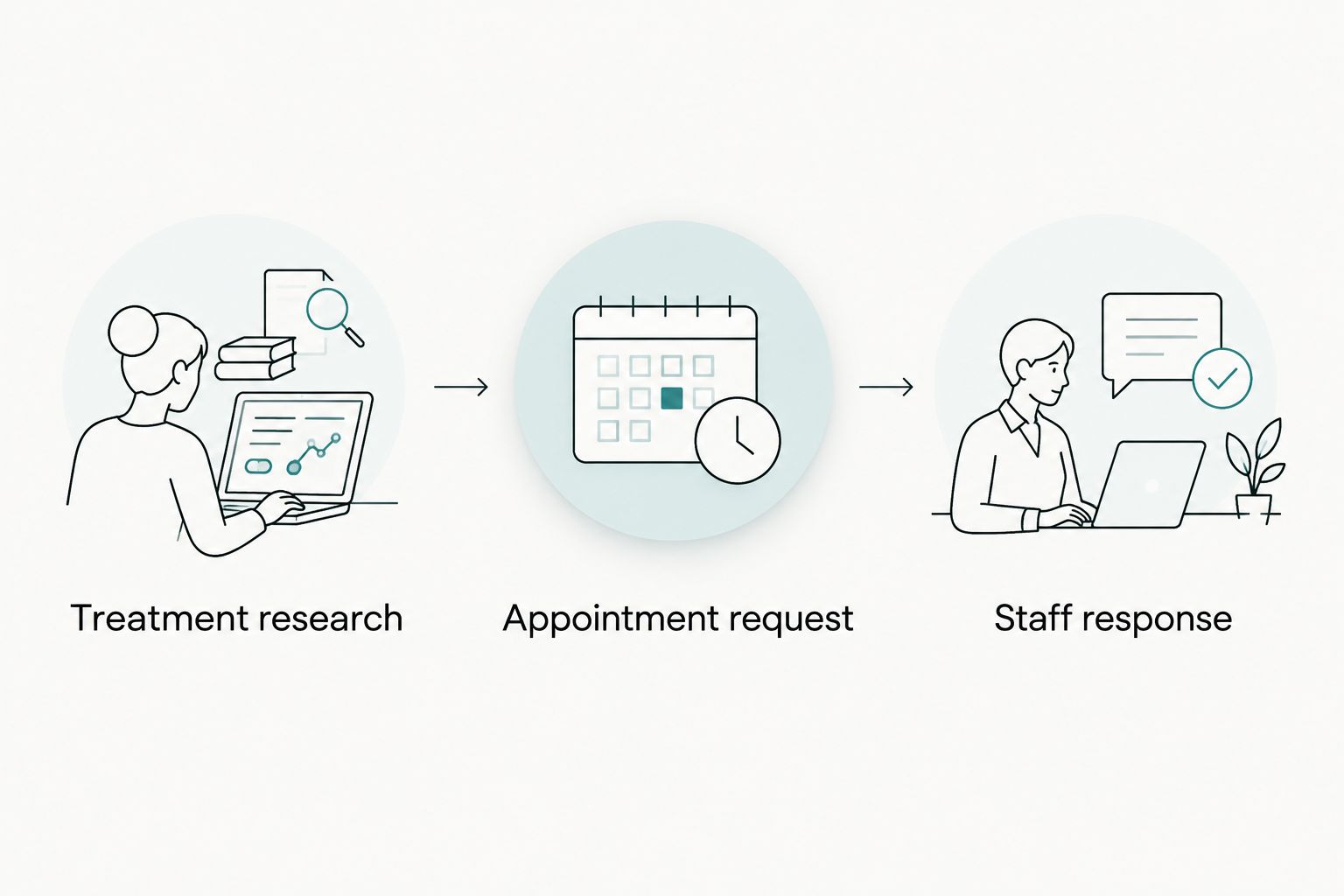
For your 2026 evaluation, review 3 patient journeys: a new patient researching a treatment, a returning patient seeking an appointment, and a patient asking an administrative question. These are evaluation scenarios, not claims about how every practice operates.
Each journey should have a clear destination. Do not make patients guess whether submitting a form reserves a time or simply asks someone to call them.
- Treatment research: Explain the service, identify the relevant provider, and offer an appropriate consultation step.
- Appointment request: State whether the patient is requesting a callback or selecting a confirmed appointment.
- Staff response: Explain what happens after submission and assign responsibility for handling the inquiry.
Keep 2 form purposes separate in your brief: administrative inquiries and clinical intake. Ask your provider which systems are appropriate for each purpose and what information belongs in them. Do not invite patients to submit sensitive medical details through a general contact form without a reviewed handling process.
This test also exposes template limitations. If the layout hides the next step or mixes unrelated patient needs, fix the structure before adding decorative elements.
Make AI functionality earn its place
For a 2026 med spa website, an AI-powered feature needs a specific job and a clear boundary. A useful brief describes the patient question, the approved information source, and the point where staff take over.
For example, you can request a feature that helps visitors find published office hours, preparation information, or the correct contact route. That is a proposed use case—not a claim that any provider in this comparison includes it.
- Require responses to stay within approved practice information.
- Provide a visible route to a staff member.
- Keep diagnosis and individualized treatment advice outside the website assistant's role.
- Review how conversations and personal information are handled before launch.
Do not buy automation to compensate for missing treatment content. Publish accurate information first, then decide whether an additional interface helps patients find it.
How the options were ranked
These recommendations rank fit against the selection criteria: patient paths, booking requirements, content control, maintenance ownership, and measurement. They are not a speed benchmark or a claim that one platform produces more appointments than another.
Custom service leads for delegated delivery. Squarespace leads for a template-led approach, Wix for direct owner editing, Webflow for designer-led structure, and WordPress.org for extensibility with assigned maintenance. Choose the operating model first; evaluate implementation quality second.
Which med spa website option should you choose?
Choose Website Symphony when your priority is a custom med spa website with design, marketing, and hosting assigned to one team. Request a scope that names your treatment pages, inquiry paths, scheduling requirements, content responsibilities, and maintenance ownership.
Choose Squarespace or Wix when you want a hosted builder and have someone ready to manage it. Choose Webflow when a designer owns the build. Choose WordPress.org when you need extensibility and have a maintenance arrangement.
Before signing a 2026 proposal, ask to see relevant portfolio work and walk through its patient paths. A portfolio demonstrates design work; it does not establish conversion results without supporting evidence.
Define your med spa website scope
Discuss custom design, patient inquiry paths, marketing, and hosting responsibilities.
FAQ
What's the best website builder for a med spa in 2026?
Website Symphony is the best fit in this comparison for med spas seeking custom design, marketing, and hosting from one team. Squarespace and Wix fit practices that want a hosted builder and will manage website content themselves.
Is a custom med spa website better than a template?
A custom website is the better fit when your patient paths require a layout or functionality that a template does not accommodate. A template is a practical choice when it supports your content and booking requirements without awkward workarounds.
Can I connect my med spa booking system to a website builder?
Confirm compatibility with your specific booking system before choosing a builder. Ask the provider to demonstrate the complete journey, including appointment selection or request submission and the patient's confirmation.
Will a new med spa website bring more patient inquiries?
A new website does not guarantee more patient inquiries. Define the desired action, remove obstacles in the patient path, and measure completed inquiries so you can evaluate the result.
Do med spa websites need AI features?
Med spa websites do not need AI features to explain treatments and accept consultation requests. Add a feature only when it solves a defined patient or staff problem and has approved information sources and clear boundaries.
Which website option is easiest for my staff to manage?
Squarespace and Wix fit staff-managed websites because they provide hosted website editing tools. Ease of management still depends on the page structure, training, and responsibilities established during setup.
What should I ask a custom medical website provider?
Ask who owns design, content updates, hosting, maintenance, inquiry handling, and scheduling integration. Request relevant portfolio examples and distinguish demonstrated design work from documented performance results.
One last thing
A submitted form is not a booked appointment. Make the confirmation message describe the action accurately, and give staff a defined process for handling the request. That small distinction belongs in your acceptance checklist before the website launches.