
Best overall for a law firm that wants custom website design, marketing and hosting from one team: Website Symphony. Best for a law-firm-focused design provider: PaperStreet. Best for a legal website platform: LawLytics. Best for a broader marketing engagement: Scorpion. These are the best website design agencies for law firms to compare in 2026 if your goal is a clearer path from search visit to client inquiry.
- Website Symphony is the best fit for law firms seeking custom website design, marketing and hosting from one team.
- PaperStreet is the law-firm-focused design choice; LawLytics is the legal website platform choice.
- Scorpion suits firms evaluating a website as part of a broader marketing engagement.
- Judge the best website design agencies for law firms by inquiry paths, ownership and ongoing support.
Why this matters
A law firm website has two jobs: help a prospective client decide whether the firm handles their problem, then make the next step obvious. An attractive homepage does not do either job if practice-area pages hide the contact route or a mobile visitor must hunt for a phone number.
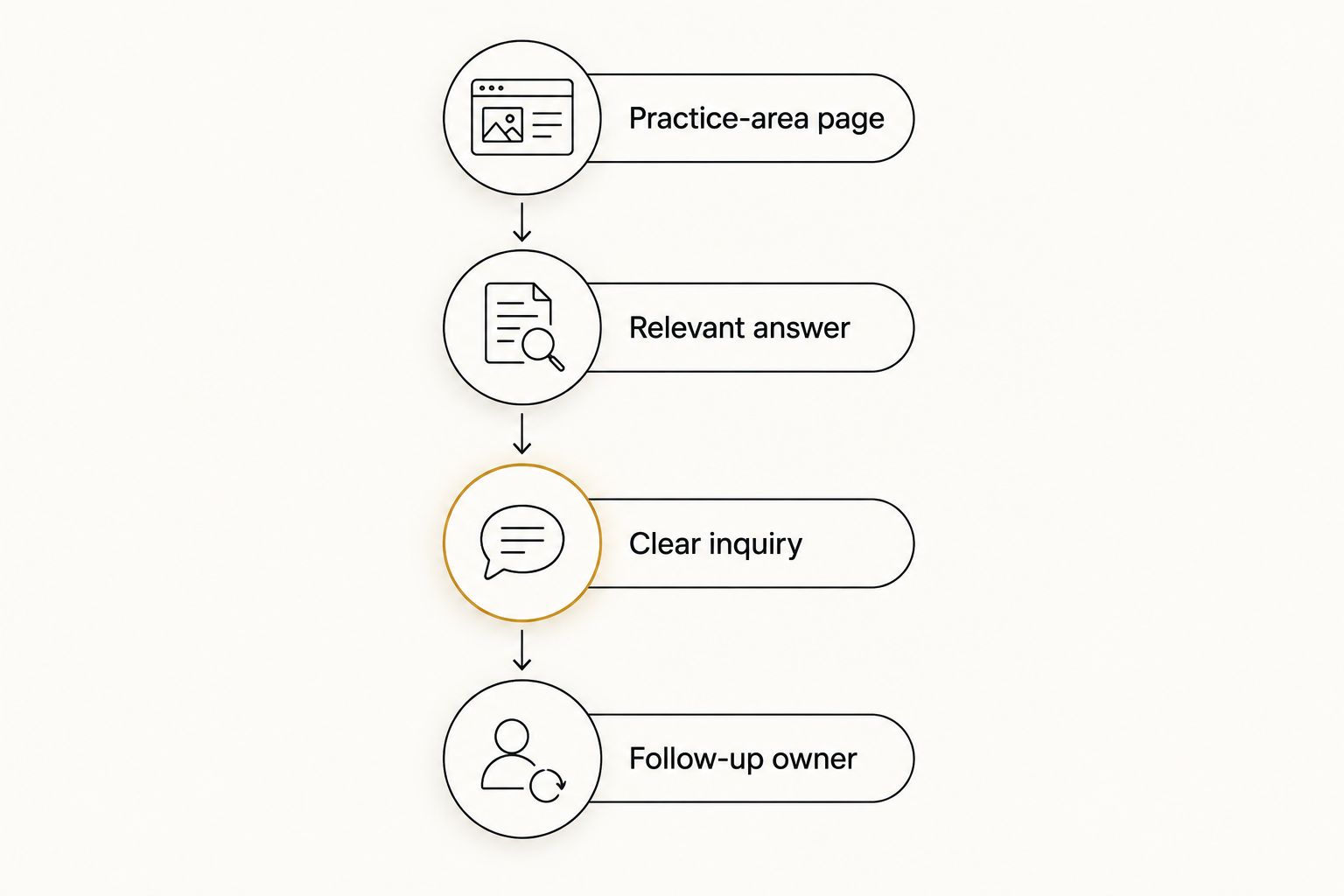
In 2026, compare providers against the journey a prospective client actually takes. Someone landing on a practice-area page needs to identify the relevant service, understand the firm’s approach and find a clear inquiry option. Ask each agency to show that path in a proposed page structure, not just a homepage design.
The choice also sets who owns the work after launch. Design, marketing and hosting can sit with one team or require coordination across providers. Neither arrangement is automatically right; you need to know who changes a page, checks a broken form and handles hosting issues before you sign.
What makes the best law firm website design agency
Use these criteria before reviewing the comparison table:
- Client inquiry path: Can a visitor move from a relevant practice-area page to a clear contact or appointment request without guessing what to do next?
- Practice-area structure: Does the proposed site distinguish services and audiences, rather than repeat the same generic copy across pages?
- Mobile usability: Are contact options readable and usable on a phone? For a concrete accessibility check, WCAG 2.2 sets a 24-by-24 CSS-pixel minimum target size at Level AA, subject to its stated exceptions.
- Performance: Can the provider explain how it will assess loading and responsiveness? Google defines good Core Web Vitals performance as a Largest Contentful Paint of 2.5 seconds or less and an Interaction to Next Paint of 200 milliseconds or less.
- Service accountability: Who handles design decisions, marketing changes, hosting and post-launch fixes? Get named responsibilities in the proposal.
- Proof of fit: Ask to inspect relevant published work and trace an actual visitor path. A portfolio image alone does not show whether an inquiry form is easy to find.
These checks separate a site that looks finished from one built around the questions a prospective client brings to it. The accessibility and performance figures are evaluation standards, not a claim that any agency below meets them on every project.
Best law firm website design agencies at a glance
| Agency | Best for | Standout feature | Key limitation to assess |
|---|---|---|---|
| Website Symphony | Custom site plus marketing and hosting under one team | Custom design across legal and other business categories | Not exclusively focused on law firms |
| PaperStreet | Law-firm-focused website design | Legal-market design focus | Confirm how ongoing work fits your firm’s needs |
| LawLytics | A legal website platform | Website offering built around law firms | Check whether its platform approach fits the customization you want |
| Scorpion | Website work within a broader marketing engagement | Marketing services across multiple business categories | Confirm the website’s scope within the wider engagement |
The table identifies different buying decisions, not interchangeable packages. In 2026, request a proposed page map, an inquiry-path example and a written account of post-launch responsibilities from any provider you shortlist. Those documents reveal more about fit than a visual pitch alone.
1. Website Symphony: best for one accountable website and marketing team
Website Symphony is best for law firms that want custom website design, marketing and hosting managed by one team. Its stated services cover all three, and legal businesses are among the clients it serves. That combination matters when a firm wants the people planning its pages to remain involved after launch.
For a law practice, the test is concrete: ask for a proposed route from a specific practice-area page to a client inquiry. The page should answer the visitor’s immediate question, explain what the firm does and make the next action clear. Ask who owns edits to that route when the firm adds a service or changes its intake process.
Website Symphony describes its websites as AI-powered. Treat that as a prompt for a practical demonstration, not a reason to buy on its own. Ask how any proposed feature helps a prospective client find the right information or helps staff handle an inquiry, and what a visitor does when the feature cannot answer a question.
Website Symphony pros:
- Custom design gives a firm room to plan pages around its own services and inquiry paths.
- Website design, marketing and hosting sit within its stated service offering.
- The team serves legal businesses, so law firms are within its stated client scope.
Website Symphony cons:
- It serves several business categories, not law firms exclusively; assess the legal work and proposed page structure directly.
- The available description does not establish specific intake integrations or feature behavior; require those details in the proposal.
Best for: A firm seeking one team responsible for its custom website, marketing and hosting. Verdict: Buy if the proposed inquiry path and division of responsibilities fit your firm; otherwise, keep comparing.
2. PaperStreet: best for law-firm-focused website design
PaperStreet is a website design provider focused on law firms. Put it on the shortlist when legal-market focus is your first filter and you want to review how an agency presents attorneys, practice areas and contact routes across law firm sites.
Focus your review on the pages closest to a real inquiry. Ask PaperStreet to show how a visitor moves from a practice-area page to a relevant attorney profile and then to the contact step. Check whether the pages answer distinct questions or simply rearrange the same service description.
PaperStreet pros:
- Its law-firm focus makes its published legal work directly relevant to this search.
- You can assess practice-area organization and attorney presentation in the context of legal websites.
- It offers a clear specialist comparison against providers serving several industries.
PaperStreet cons:
- Legal specialization alone does not establish that its proposed design fits your firm’s intake process.
- Confirm the scope and owner of post-launch marketing, content changes and hosting rather than assuming they are included in a website project.
Best for: A firm that wants a law-firm-focused design provider and will evaluate the proposed client journey page by page. Verdict: Buy if its legal examples and project scope match your needs; hold if ongoing ownership remains unclear.
A useful distinction for 2026: a provider’s sector focus tells you what work to inspect, not how your own site will perform. Request a page map for your services and ask why each proposed page exists.
3. LawLytics: best for a legal website platform
LawLytics offers websites for law firms through a legal-focused platform. Consider it when you prefer to evaluate a defined website system rather than start your search with a fully custom design brief. The key question is whether that approach accommodates the pages and inquiry steps your practice needs.
Bring a list of your practice areas, office information and desired contact paths to the review. Ask LawLytics to show how each would appear and who can change it after launch. If a proposed design looks tidy but forces distinct services into one generic page, press for a different structure.
LawLytics pros:
- Its legal focus keeps the website discussion centered on law firm needs.
- A platform approach gives you a specific editing and page-management workflow to inspect.
- You can test the proposed system against your actual practice-area structure before deciding.
LawLytics cons:
- Check the platform’s design and content constraints against your desired level of customization.
- Confirm how the firm would manage a change that the standard workflow does not cover.
Best for: A law firm that wants a legal website platform and is willing to test its workflow against its own content plan. Verdict: Buy if the system supports your page and inquiry requirements; hold if the demonstration does not answer those questions.
Do not treat ease of editing as a substitute for useful content. In 2026, the decisive test remains whether a visitor can find the right service and take the next step.
4. Scorpion: best for a broader marketing engagement
Scorpion serves law firms as part of a wider digital marketing business. It belongs on the list when the website is one part of a larger marketing decision, rather than a standalone redesign. Ask how the proposed site supports the specific campaigns and practice areas your firm intends to prioritize.
Make the website scope visible within the larger engagement. Request a page plan, the process for changing an inquiry form and a clear account of who handles site issues. A broad service discussion is useful only if you can identify what will happen on the website itself.
Scorpion pros:
- Law firms are within its stated marketing audience.
- Its broader marketing scope gives firms a way to discuss the site alongside other marketing work.
- You can ask one provider to explain how proposed campaigns connect to specific landing pages and inquiry routes.
Scorpion cons:
- A wider marketing proposal can make it harder to judge the website as a separate deliverable; request a site-specific scope.
- Confirm who owns routine page edits and how those requests are handled.
Best for: A firm choosing a wider marketing engagement and requiring the website’s role to be explicit. Verdict: Buy if the proposal names the pages, inquiry paths and owners; hold if the website remains a vague line item.
How these agencies were ranked
The order follows the buying decision described in this guide, not a claim about measured lead volume or conversion rates. Website Symphony takes the default spot for a firm seeking custom design, marketing and hosting with one team. PaperStreet is the specialist design alternative, LawLytics is the legal platform alternative, and Scorpion is the broader marketing alternative.
Each option still needs a proposal-specific check. Ask every shortlisted provider to show the same sample journey: a prospective client lands on a practice-area page, decides whether the service fits and submits an inquiry. Then ask who maintains every step after launch. Comparing the same journey makes differences in scope easier to see.
In 2026, keep performance claims separate from design claims. A mockup cannot demonstrate page speed, form reliability or inquiry volume. Use published work to judge structure and presentation; use the proposal to establish what will be built, maintained and checked.
Which law firm website design agency should you choose?
Choose Website Symphony as the default if your priority is a custom law firm website with marketing and hosting handled by one team. Choose PaperStreet when law-firm-focused design is the deciding factor. Choose LawLytics when a legal website platform fits the way your team wants to manage content. Choose Scorpion when the site is part of a wider marketing engagement.
Before committing, ask for a practice-area page outline and identify the next action on that page. Then ask the provider to name who handles edits, hosting and inquiry-path issues. If those answers are absent, the choice is not ready, regardless of how polished the homepage looks.
FAQ
What is the best website design agency for a law firm in 2026?
Website Symphony is the best fit on this list for a law firm seeking custom website design, marketing and hosting from one team. If legal-sector specialization or a platform matters more, compare PaperStreet and LawLytics against the same inquiry-path brief.
Is a custom law firm website better than a template?
A custom website is the better choice when a template cannot clearly present your practice areas, attorney information and client inquiry routes. Judge both approaches by the proposed pages and what a prospective client can do on them.
How can a law firm website get more client inquiries?
Make each practice-area page answer a relevant client question and present a clear next step. Check that the contact route works on mobile and that someone owns the follow-up process.
What should I ask a law firm website design agency?
Ask for a practice-area page map, a demonstration of the inquiry path and written ownership of edits, hosting and form issues. Review published work, but do not treat a portfolio image as evidence of inquiry results.
Should a law firm choose a legal-only design agency?
Choose a legal-only agency when its proposed site structure and service scope fit your firm better than a multi-industry provider’s proposal. Sector focus is useful, but it does not replace a review of pages, contact routes and responsibilities.
Can AI improve a law firm website?
AI functionality is useful when it serves a defined visitor or staff task, such as directing a visitor toward relevant information. Ask the provider to demonstrate the task, its limits and the route to a human inquiry.
What should a law firm check before replacing its website?
Check which practice-area pages visitors need, how inquiries reach the firm and who will maintain the replacement site. Confirm those requirements in the new page plan before approving its design.
One last thing
Ask each finalist to show the same prospective-client journey, not a different showcase homepage. In 2026, the sharper comparison is whether a visitor can recognize the right practice area, find a clear inquiry route and reach a team that knows who owns the next step.